

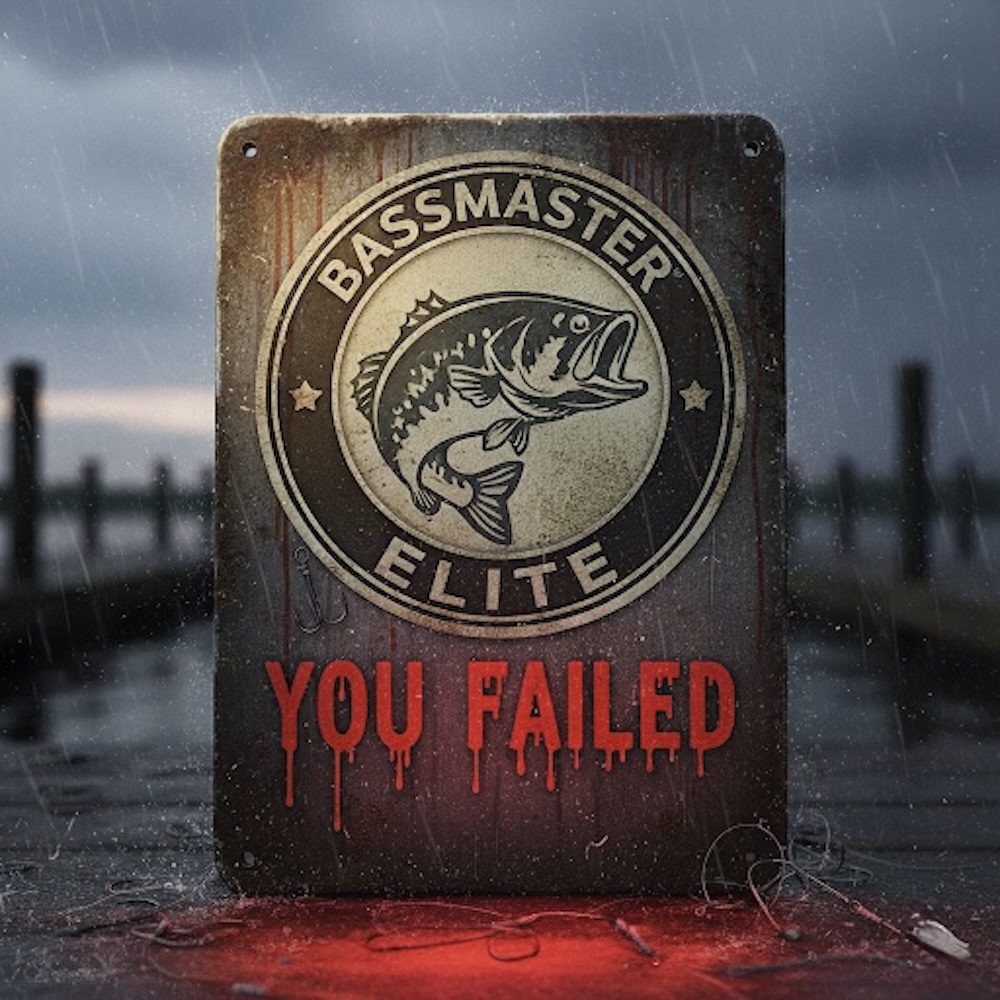
In 2025, what began as another Elite Series season turned into a major flashpoint: multiple top pros failed credibility assessments, triggering disqualifications, fines, and even retirements. These weren’t fringe stories — the fallout came from some of the most respected names in the bass circuit, and it forced the sport to face a hard truth: information is no longer just a tactical tool — it’s a test of character.
The Anglers Who Fell
- Logan Latuso
At the Bassmaster Elite event on Lake Tenkiller, Logan Latuso was disqualified after failing a polygraph-based credibility assessment. According to Bassmaster, he violated Rule C3.3(ii)(a) and (j), which prohibits receiving non-public information from non-competitors. Bassmaster- This was not a one-time mistake: Latuso requested a retest, but he failed again. Bassmaster
- Because of Latuso’s disqualification, his 9th-place finish was vacated, and everyone below him moved up a rank. Bassmaster
- The penalty is steep: B.A.S.S. rules allow up to a $10,000 fine for first-time intentional violations under this rule. Bassmaster+1
- KJ Queen
KJ Queen was disqualified from the Elite event on the Mississippi River. Bassmaster reported that he “failed a screening credibility assessment … randomly selected based on finishing place.” Bassmaster- Like Latuso, Queen was examined a second time by an independent examiner — and failed again. Bassmaster
- Her 8th-place finish was vacated, and the anglers below her moved up. Bassmaster
- Under the same rule (C3.3(ii)), this was treated as a first offense, triggering disqualification and possible fine. Bassmaster
- Matt Herren
Possibly the most dramatic case: veteran Elite pro Matt Herren was disqualified after a credibility test. Bassmaster officials said he violated the same C3.3 rule, receiving nonpublic information from a non-competitor. Bassmaster+2SI+2- The statements came out during the polygraph assessment, leading to a formal rule violation. Bassmaster
- His 40th place finish at the St. Johns River Elite was erased. Bassmaster
- The fallout was personal: Herren announced he would exit the Elite Series entirely. SI
- His son, Josh Herren, later posted about their side of the story: he said a casual comment about fishing spots was misconstrued as “soliciting” for competitive advantage. SI
- Scott Martin
Scott Martin’s case is particularly complicated — and deeply personal. According to Bass Fishing Insider, he self-reported that he had an unauthorized conversation with a non-competitor about fishing conditions on Lake Okeechobee, violating the no-information rule. Bass Fishing Insider- He said it happened while rigging his boat, talking with a local angler. Bass Fishing Insider
- Martin expressed regret, saying he “simply did not shut it down quickly enough,” but insisted he didn’t use the information to improve his tournament plan. Bass Fishing Insider
- According to Sports Illustrated / On SI, he later withdrew voluntarily from the rest of the 2025 Elite season even before a formal polygraph exam was completed. SI+1
- On Wired2Fish, it’s reported that Martin refused the B.A.S.S.-administered polygraph exam, citing concerns over the tester. However, he later took an independent polygraph (by a former law enforcement officer) and passed that one. Wired2Fish+1
Why These Cases Matter
These high-profile DQs changed the tone of the 2025 season. Not only did they make anglers nervous about casual conversations, but they also exposed a harsh reality: the no-information rule isn’t just theoretical anymore. It’s being enforced with teeth.
- Credibility assessments (polygraphs) are real threats. Even veteran anglers who have been around for decades aren’t immune.
- Casual conversations can be weaponized. What seems innocent — talking to a local angler, chatting at a marina, exchanging fishing observations — can trigger a full-blown investigation.
- The line between intentional and unintentional is razor thin. Some anglers insist they never meant to gain an advantage, but under the rulebook and the polygraph, their intent doesn’t always matter.
- Reputation is on the line. For Herren, this was the end of his Elite career. For Latuso and Queen, their top finishes disappeared. For Martin, the stress and uncertainty cost him the rest of his season.
If nothing else, the 2025 incident tells us that in bass fishing — as in many modern sports — information is power, but so is accountability. B.A.S.S. made a strong statement: it’s not enough to fish hard and know your way around a lake anymore. You also have to be able to defend everything you say and remember.
Sources
- Bassmaster: Matt Herren disqualified at St. Johns River Bassmaster
- Bassmaster: Logan Latuso disqualified at Tenkiller Bassmaster
- Bassmaster: KJ Queen disqualified at Mississippi River event Bassmaster
- Bass Fishing Insider: Scott Martin DQ’d at Lake Okeechobee Bass Fishing Insider
- Sports Illustrated / On SI: Scott Martin withdraws after protest SI
- Wired2Fish: Scott Martin’s withdrawal, polygraph dispute Wired2Fish
- Wired2Fish: Opinion on no-information rule & recent DQs Wired2Fish
- Bassmaster Official 2025 Elite / Classic Rules (C3.3 rule details) Bassmaster