

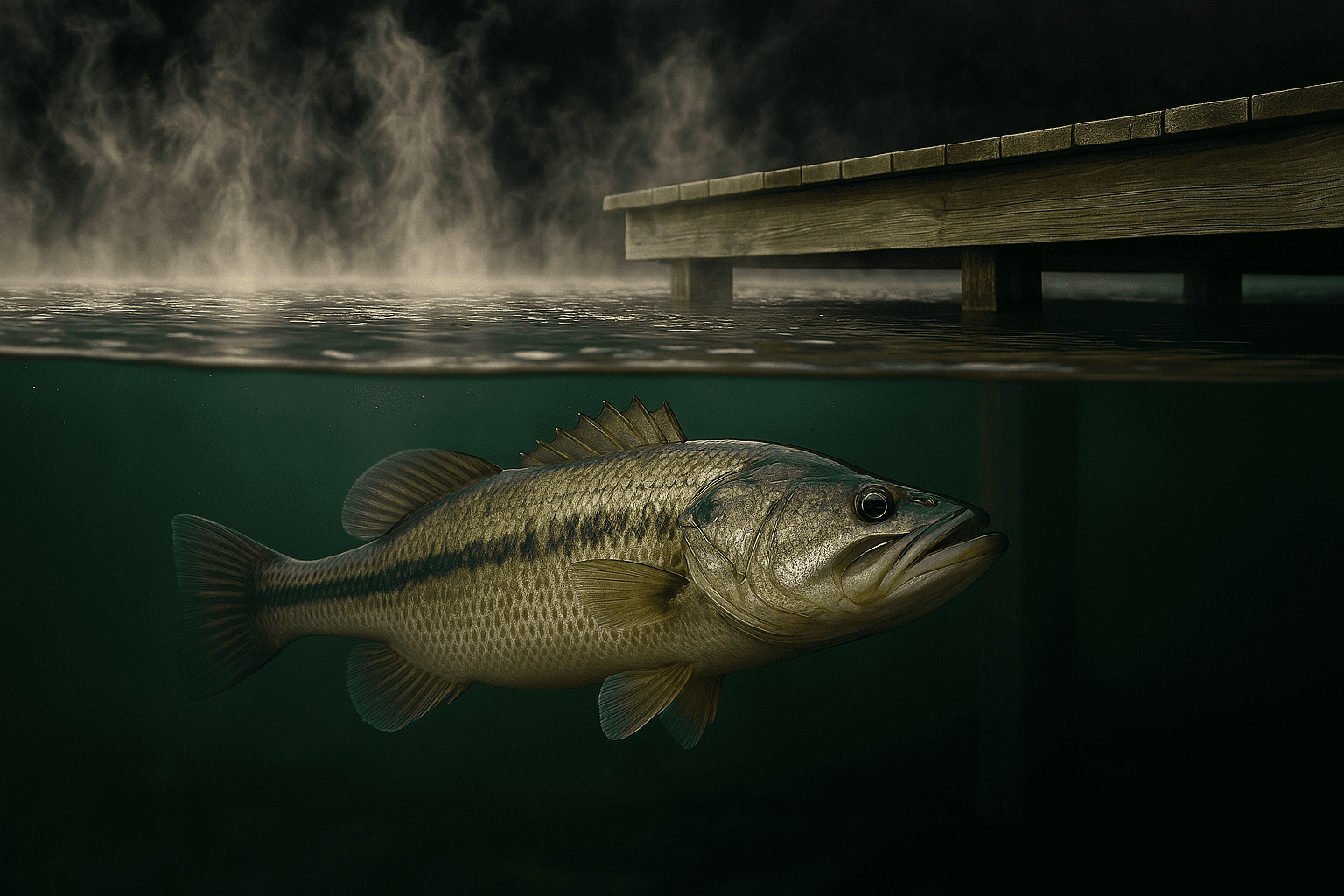
When the thermometer hits 80°+, bass aren’t just being picky—they’re fighting to stay alive
Ever wonder why bass seem to disappear when summer heats up? The answer lies in their biology.
The Heat Problem is Real
Bass are cold-blooded animals. This means their body temperature matches the water around them. When water gets hot, their bodies heat up too—and that creates big problems.
Dr. Sarah Lennox, who studies fish biology, explains it simply: “At 80 degrees and above, a bass’s body goes into overdrive mode. It’s like forcing your car engine to run at maximum RPMs all day long.”
Here’s what happens inside the fish:
- Their metabolism speeds up dramatically
- They need 2-3 times more oxygen just to breathe normally
- Hot water holds much less oxygen than cool water
- It’s like trying to breathe through a straw while running a marathon
Where Do Bass Go When It’s Hot?
Bass don’t just randomly swim deeper. They’re looking for a special underwater zone called the “thermocline.” Think of it as nature’s air conditioning layer.
The thermocline is where cooler water meets warmer water. It usually sits 15-25 feet down in most lakes. Here’s why bass love it:
- The water is several degrees cooler
- It has more oxygen dissolved in it
- Bass can hang out without working so hard to breathe
When a bass finds this sweet spot, its body can finally relax. Its gills don’t have to work overtime, and blood can flow normally to all its organs instead of just keeping the heart and brain alive.
The “Lazy Bass” Myth Busted
Think summer bass are just being lazy? Wrong! They’re being smart about survival.
Here’s what’s really happening:
- Energy Conservation: Every movement burns precious oxygen. Bass reduce their swimming by 70% to save energy.
- Picky Eating: They only eat when food is super easy to catch. No chasing required.
- Night Shift: Many bass switch to feeding at night when water cools down 5-10 degrees.
Dr. Marcus Reed, a fish expert, puts it this way: “Above 80 degrees, it’s not about feeding—it’s about not dying. Bass become prisoners of the heat.”
Why Your Fishing Lures Don’t Work
Summer bass biology explains why your favorite lures suddenly stop working:
Fast-moving baits fail because bass can’t afford the energy to chase them. Imagine trying to sprint when you’re already out of breath.
Shallow water fishing fails because that’s where the water is hottest and has the least oxygen. It’s like fishing in a desert.
Loud, flashy lures fail because stressed bass want easy meals, not exciting hunts.
What Actually Works in Hot Weather
Smart anglers work with bass biology, not against it:
Fish Deep and Slow: Use drop-shot rigs, jigs, or soft plastic worms near the thermocline. A fish finder helps you locate the exact depth where temperature changes.
Fish at Night: When the sun goes down, water cools and bass move shallow to feed. Try topwater frogs or soft baits.
Find Moving Water: Look for spots where water moves—below waterfalls, near dam outflows, or wind-blown banks. Moving water has more oxygen.
Go Small: Downsize your lures. A small finesse worm beats a big flashy crankbait every time.
The Bottom Line
Summer bass aren’t being difficult—they’re fighting a biological battle against heat and low oxygen. Understanding this changes everything about how you fish.
The key is simple: slow down, go deep, and follow the oxygen. Respect what the fish are going through, and you’ll catch the few bass that are willing to bite.
Next time you’re on the water and it’s blazing hot, remember—those bass aren’t hiding from you. They’re hiding from the heat, just trying to survive another scorching summer day.