Wednesday, December 17, 2025
Home Blog Page 1058

POTOMAC RIVER SET FOR FLW TOUR REGULAR-SEASON FINALE PRESENTED BY COSTA DEL MAR

POTOMAC RIVER SET FOR FLW TOUR REGULAR-SEASON FINALE PRESENTED BY COSTA DEL MAR

Angler of the Year, Rookie of the Year and Forrest Wood Cup Field to all be Decided

[print_link]

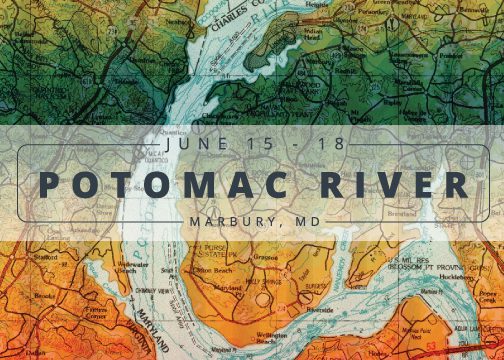
MARBURY, Md. (June 1, 2017) – The seventh and final regular-season event of the 22nd season of the FLW Tour, the most competitive circuit in professional bass fishing, is coming to Marbury June 15-18 for the FLW Tour at the Potomac River presented by Costa Del Mar. Hosted by the Charles County Board of Commissioners, the tournament will feature 320 pros and co-anglers casting for top awards of up to $125,000 cash in the Pro Division and up to $25,000 cash in the Co-angler Division.

The FLW Tour last visited the Potomac River in 2015, when pro Clark Wendlandt of Leander, Texas, took top honors with a four-day cumulative weight of 60 pounds even. This year, local pro Bryan Schmitt of Deale, Maryland, said he expects a lot more weight to come from the tidal fishery.

“I believe the weights will be substantially higher than when the Tour visited in 2015,” said Schmitt, who has 20 career top-10 finishes on the Potomac River in FLW competition. “The grass has really improved over the last two years and there’s a lot food in the system for these fish. The bass haven’t had to expend a lot of energy and have gotten big in a short amount of time.”

Schmitt said areas like Chicamuxen Creek, Wades Bay, Aquia Creek and Nanjemoy Creek will be popular because they tend to harbor the cleanest water.

“I think a lot of competitors will work their way into shallow, protected bays and cull through a ton of fish,” said Schmitt. “They’ll have to try to find that 4-pounder that sets them apart from the rest of the field – they’re out there.”

Schmitt said an assortment of baits including soft-plastic worms, jigs, frogs, stickbaits and swimbaits will be featured in this event. The Maryland veteran predicted the winner will need as much as 80 pounds of bass over four days to secure the win, a major increase in weight from just two years ago.

“If we don’t get any heavy rainfall or flooding prior to the event, I think we’re going to be in for a pleasant surprise,” said Schmitt. “This fishery can definitely produce 20 pound limits a day right now.”

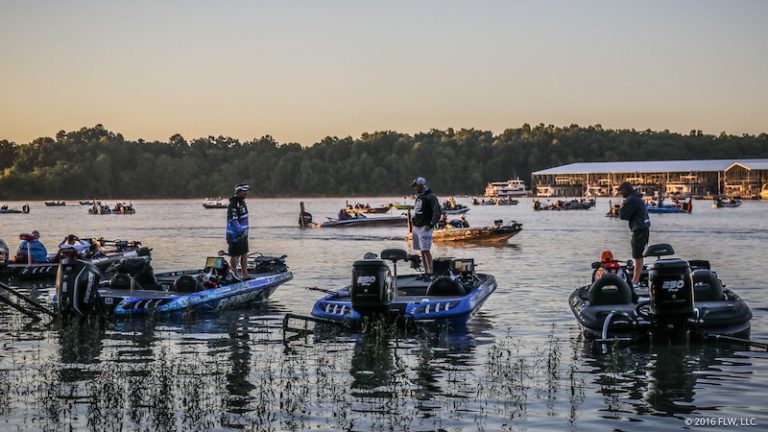
Anglers will take off at 6:30 a.m. EDT each day from Smallwood State Park, located at 2750 Sweden Point Road, in Marbury. Thursday and Friday’s weigh-ins, June 15-16, will be held at Smallwood State Park beginning at 3 p.m. Saturday and Sunday’s weigh-ins, June 17-18, will also be held at Smallwood State Park, but will begin at 4 p.m.

Prior to the weigh-ins Saturday and Sunday, fans are invited to come out and experience the free FLW Expo at Smallwood State Park from noon to 4 p.m. The FLW Expo is a great opportunity for fishing fans of all ages to meet-and-greet with top FLW Tour anglers, enjoy games, activities and giveaways provided by FLW sponsors, and learn more about the sport of fishing and other outdoor activities.

Youth are also invited to participate in the free FLW Foundation Unified Fishing Derby at Smallwood State Park, located at 2750 Sweden Point Road in Marbury, on Saturday, June 17, from 9-11 a.m. The event, hosted by FLW Foundation pro Cody Kelley along with other FLW Tour anglers, is free and open to area youth (18 years of age and younger) and Special Olympics athletes (all ages). Rods and reels are available for the first 50 participants to use, but youth are encouraged to bring their own if they own one.

In FLW Tour competition, pros and co-anglers are randomly paired each day, with pros supplying the boat, controlling boat movement and competing against other pros. Co-anglers fish from the back deck against other co-anglers. The full field competes in the two-day opening round. Co-angler competition concludes following Friday’s weigh-in, while the top 20 pros based on their two-day accumulated weight advance to Saturday. Only the top 10 pros continue competition Sunday, with the winner determined by the heaviest accumulated weight from the four days of competition.

Throughout the season, anglers are also vying for valuable points in hopes of qualifying for the 2017 Forrest Wood Cup, the world-championship of professional bass fishing. The 2017 Forrest Wood Cup will be on Lake Murray in Columbia, South Carolina, Aug. 11-13.

The total purse for the FLW Tour at the Potomac River presented by Costa Del Mar is more than $800,000, including $10,000 through 50th place in the Pro Division.

Television coverage of the FLW Tour at the Potomac River presented by Costa Del Mar will premiere in high-definition (HD) on NBC Sports Network (NBCSN) Sept. 20 from 12 p.m.-1 p.m. EDT. The Emmy-nominated “FLW” television show airs on NBCSN, the Pursuit Channel and the World Fishing Network and is broadcast to more than 564 million households worldwide, making it the most widely distributed weekly outdoors-sports television show in the world.

For complete details and updated information visit FLWFishing.com. For regular updates, photos, tournament news and more, follow us on Facebook at Facebook.com/FLWFishing and on Twitter at Twitter.com/FLWFishing.
Seaguar pros make the case for braided lines when fishing in the slop

Tandem Patterns for Summer Bass Success

Seaguar pros make the case for braided lines when fishing in the slop

[print_link]

New York, NY (May 31, 2017) – Bass are drawn into dense weed growth as water temperatures peak in summer. Not only are bass protected from the heat of the sun by canopies of surface vegetation, but these sheltered areas also feature an endless array of feeding options, as baitfish and small panfish are pulled into weedy cover for the chance to survive another day. Anglers have several options for extracting summer bass from heavy weed growth: they can tempt fish to the surface with topwater presentations, or punch through the weedy canopy, fishing beneath it with heavy jigs.

Two top Seaguar pros, Brandon Palaniuk and Denny Brauer, offer their perspectives on these techniques, and reveal their top line choices for summer bass fishing in heavy cover.

When the sun is low, fish on top.

It’s tough to beat a topwater presentation in the weeds during low light periods. Hollow, soft-bodied topwaters with a frog, mouse, or even a sunfish profile are excellent choices for tempting strikes from bass in the slop. These baits are heavy enough to cast long distances, are properly weighted to ensure that hook points are protected from the weeds, and have supple bodies that collapse readily after the strike to facilitate positive hooksets.

Seaguar’s Smackdown Tournament Braid is unique blend of eight ultra-thin, micro-weave strands with a round, smooth-casting profile.

Effective topwater presentations require attention to detail regarding line selection. For Bassmaster Elite Series Pro Brandon Palaniuk, topwater slop fishing calls for Seaguar’s Smackdown Tournament Braid in 50 lb. test. Palaniuk relies on Smackdown because of “its smooth characteristics which helps with casting accuracy, and Smackdown’s high impact and knot strength really help with the powerful hooksets that come with the territory.” Indeed, no-stretch Smackdown Tournament Braid allows anglers to drive hooks home at long distances, and excels at cutting through weeds when fighting hooked fish.

Two basic retrieves are useful for topwater presentations in and near heavy cover. Anglers can use a simple series of short hops and twitches, or a traditional “walk the dog” retrieve along the edges of dense weed growth. Perhaps the most important ingredient for successful topwater fishing, however, is patience: topwater strikes can be vigorous and exciting, but it is critical that your adrenaline doesn’t lead to a premature hookset. Be patient, and wait until you feel the fish on the line before driving the hooks home. You still may not land 100% of the fish that bite, but your hooking percentage will increase dramatically if you pause briefly before setting the hook.

When the sun is high, fish down deep.

Dense weedbeds may appear impenetrable when observed from above, but the water below is frequently quite open. During the heat of the day, it can be difficult to tempt fish to strike baits on the surface. However, punching through the vegetative ceiling will often be rewarded with consistent catches of summer bass. Punching is a near-vertical presentation, relying on heavy baits, powerful rods, and stout line to extract bass from within their weedy lair.

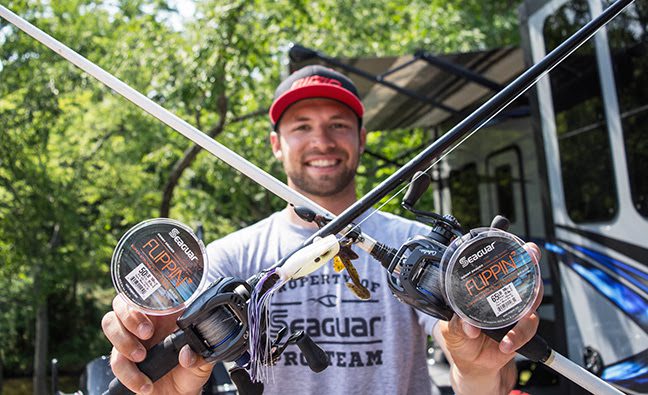
Seaguar Pro Denny Brauer’s experience fishing in heavy cover was integral to the development of Seaguar’s Flippin Braid. Image by David A. Brown/FLW Fishing.

Former Bassmaster Classic Champion Denny Brauer knows a thing or two about punching vegetation to wrangle summer largemouth, and line selection is a critical component of his success. In describing his preferred punching line, Seaguar’s Denny Brauer Signature Series Flippin’ Braid in 65 lb. test, Brauer says, “I’ve never, EVER, had this line break. It’s a great line, and as a bonus, its jet-black color will get you more bites.”  Flippin’ Braid is constructed from eight ultra-thin strands in a tight, round-profile weave, and is exceptional at cutting through heavy cover. In the heat of the summer, Brauer presents Strike King Rage Bugs, with a ¾ to 1 ½ oz. sinker pegged to his namesake Flippin’ Braid.

“This is about pulling big fish out of the nastiest vegetation you can find,” said Brauer. “You’re on a short line, and you need to feel the quick reaction strike and then literally horse the fish out of heavy cover.”

He added, “If you’re not fishing Seaguar Flippin’ Braid, you should be!”

Whether you fish up on top or down below, lush weedbeds offer outstanding summer bass opportunities. These tandem presentations for bass fishing, each relying on the premium characteristics of Seaguar braided lines, are your keys to success as water temperatures climb to their summer peak.

Seaguar’s Flippin’ Braid is an 8-strand, round weave braided line that offers exceptional knot strength and impact resistance, which are critical features when fishing in the slop.


UNIVERSITY OF SOUTH CAROLINA LEADS AFTER DAY ONE OF YETI FLW COLLEGE FISHING NATIONAL CHAMPIONSHIP ON WHEELER LAKE

UNIVERSITY OF SOUTH CAROLINA LEADS AFTER DAY ONE OF YETI FLW COLLEGE FISHING NATIONAL CHAMPIONSHIP ON WHEELER LAKE

2015 National Champs Walters and Brannon Seeking Second Team Title, Third Straight for U.S.C.

[print_link]

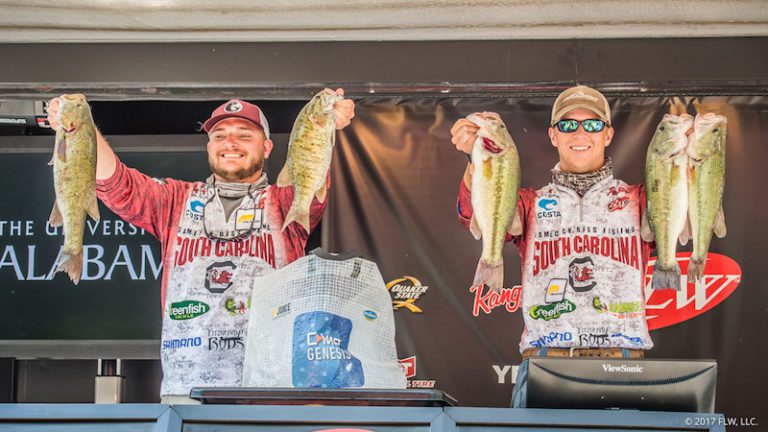
FLORENCE, Ala. (May 31, 2017) – The University of South Carolina team of Patrick Walters of Summerville, South Carolina, and Gettys Brannon of Gaffney, South Carolina, took the early lead Wednesday after Day One of the 2017 YETI FLW College Fishing National Championship on Wheeler Lake presented by Lowrance C-Map Genesis. The Gamecock duo weighed a five-bass limit totaling 17 pounds, 3 ounces and will begin Day Two with an 8-ounce lead over the second place team from Tennessee’s Bethel University.

The three-day event features 139 of the top college bass fishing clubs from across the nation competing in an internationally-televised tournament for a $30,000 prize package, including a new Ranger Z175 boat with a 90-horsepower Evinrude outboard and entry into the 2017 Forrest Wood Cup. The Forrest Wood Cup, the world championship of bass fishing, will be held August 11-13 on Lake Murray in Columbia, South Carolina, and will offer a collegiate angler the opportunity to compete for a top award of $300,000.

The University of South Carolina bass club is no stranger to the FLW College Fishing National Championship, as teams from their club have won the last two championships back-to-back. Walters and Brannon won the event on Lake Murray in 2015, then teammates Chris Blanchette and Hampton Anderson followed it up with another national championship win in 2016 on Lake Keowee. Now, Walters and Brannon are looking to make it three straight titles for the club and earn their second title as a team.

“It looks good, but nothing is coming easy,” said Brannon, a recent graduate with a degree in advertising. “We caught all of our weight by 10 (a.m.) today and then after that it was brutally slow.”

“We’re fishing offshore, and we’ve probably got about 10 to 12 spots,” said Walters, a senior majoring in business management and marketing. “Each spot gets hot at different times. I believe that there are fish on every single one of them, but you just have to time it perfectly and be there when the fish turn on.”

The duo estimated that they caught around 20 fish throughout the day, with 12 keepers. They said that they were rotating through three or four different baits, but one bait seemed to be the key for them on Wednesday.

“There are a couple of boats fishing around us, and they’re probably doing what we’re doing,” Walters said. “We’re just going to put the trolling motor down and get after it and hope that if we do it enough it will pay off.”

“This is my last college fishing tournament, so I’m just trying to enjoy it and soak it all in,” Brannon added. “I would love nothing more than to go out on top and get a chance to go back to Lake Murray to fish for the Forrest Wood Cup.”

The top 10 teams after Day One on Wheeler Lake are:

1st:  University of South Carolina – Patrick Walters, Summerville, S.C., and Gettys Brannon, Gaffney, S.C., five bass, 17-3

2nd:  Bethel University – Evan Owrey, Jackson, Tenn., and Kristopher Queen, Catawba, N.C., five bass, 16-11

3rd:  Kansas State University – Travis Blenn, Westmoreland, Kan., and Kyle Alsop, Overland Park, Kan., five bass, 16-8

4th:  University of Louisiana-Monroe – Tyler Stewart and Nicholas Joiner, both of West Monroe, La., five bass, 15-4

5th:  University of Wisconsin – Jacob Anderson and Bryce Smith, both of Princeton, Wis., five bass, 14-8

6th:  University of Oregon – Ryan Habenicht, Auburn, Calif., and Daniel Marshall, Eugene, Ore., five bass, 14-7

7th:  East Texas Baptist University – Brett Clark, Center, Texas, and Jacob Keith, Jefferson, Texas, five bass, 14-6

8th:  Murray State University – Chandler Christian, Owensboro, Ky., and Lance Freeman, Eddyville, Ky., five bass, 14-3

9th:  Bryan College – Connor Cohran, Dalton, Ga., and Cole Sands, Calhoun, Tenn., five bass, 13-2

10th:  Slippery Rock University – Logan Pollman, Slippery Rock, Pa., and Tyler Sheppard, Hermitage, Pa., five bass, 12-10

For a full list of results, visit FLWFishing.com.

Overall there were 569 bass weighing 1,075 pounds, 2 ounces caught by 132 college teams Wednesday. The catch included 87 five-bass limits.

Anglers will take off Thursday and Friday from Joe Wheeler State Park, located at 4401 McLean Drive, in Rogersville, Alabama, at 6:30 a.m. CDT. Thursday’s weigh-in will be held at the State Park beginning at 2:30 p.m. Friday’s weigh-in will be held at McFarland Park, located at 200 Jim Spain Drive in Florence, at 3 p.m., prior to the Day Two weigh-in of the BFL All-American championship at Pickwick Lake.

The winning college team will advance to compete Saturday in a one-day fish-off against each other on Wilson Lake. The two anglers will weigh in at 3:25 p.m. prior to the final weigh in of the BFL All-American championship at Pickwick Lake. The winner will advance to the Forrest Wood Cup. All takeoffs and weigh-ins are free and open to the public.

Television coverage of the YETI FLW College Fishing National Championship will premiere in high-definition (HD) on NBC Sports Network (NBCSN) Oct. 4 from Noon -1 p.m. EDT. The Emmy-nominated “FLW” television show airs on NBCSN, the Pursuit Channel and the World Fishing Network and is broadcast to more than 564 million households worldwide, making it the most widely distributed weekly outdoors-sports television show in the world.

College Fishing is free to enter. All participants must be registered, full-time students at a college, university or community college and members of a fishing club recognized by their college or university.

For regular updates, photos, tournament news and more, follow College Fishing on Facebook at Facebook.com/FLWFishing and on Twitter at Twitter.com/FLWFishing. Visit CollegeFishing.com to sign up or to start a club at your school.

‘Biggest, Most Important Happening In Bass Fishing’ Marks 50th Anniversary

[print_link]

May 31, 2017

‘Biggest, Most Important Happening In Bass Fishing’ Marks 50th Anniversary

BIRMINGHAM, Ala. — A half-century ago, when Ray Scott of Montgomery, Ala., wanted to entice outdoor media to cover his upcoming press conference, he didn’t soft-sell the event.

He invited the journalists to meet him in Springdale, Ark., and learn about “The Biggest, Most Important Happening In Bass Fishing History.”

The “happening” was the All-American Bass Tournament on Beaver Lake, Arkansas, an event many mark as the beginning of the modern era of bass fishing. The tournament was held June 5-7, 1967 — 50 years ago next week. The tournament was successful enough to launch the professional fishing careers of Bill Dance, Stan Sloan, Don Butler and others, and it inspired Scott, an insurance salesman turned promoter, to conduct a “tournament trail” of events across the country.

And it spawned the Bass Anglers Sportsman Society — B.A.S.S. for short — which would grow into the world’s largest fishing organization with more than 500,000 members and a magazine, Bassmaster, currently read by 4.5 million people each month.

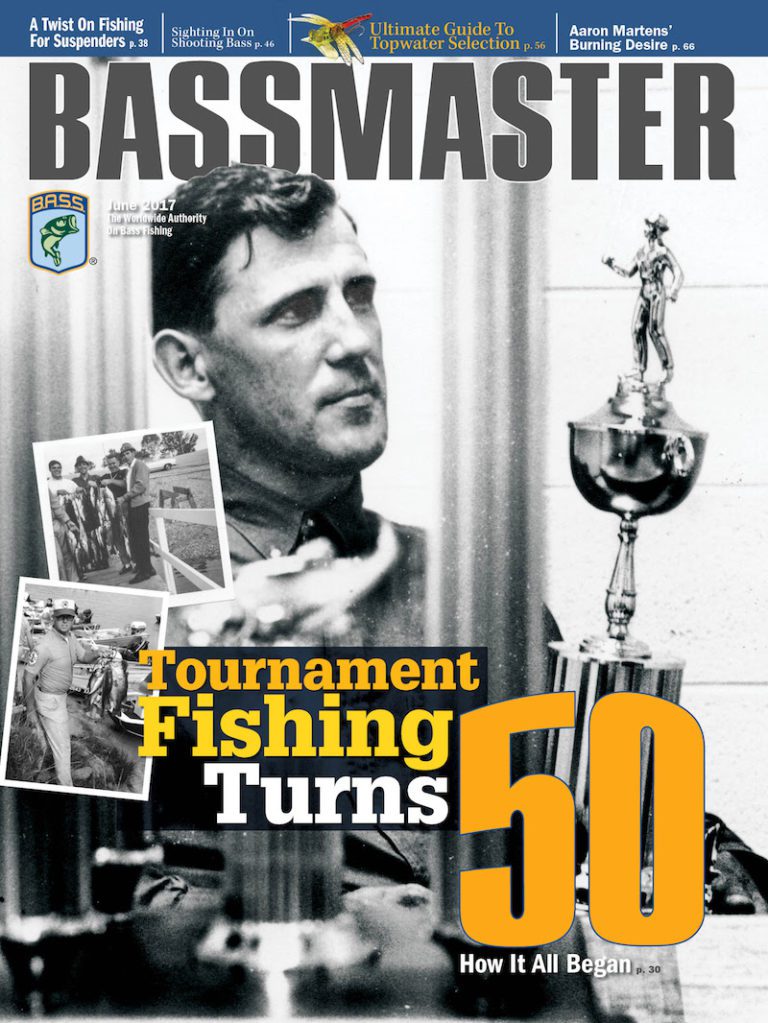
Bassmaster’s June issue marks the milestone of tournament fishing with a cover story written by Bob Cobb, who contributed greatly to the All-American’s success.

“This article is special because it pulls back the curtains and offers never-before-released details of how Scott was able to pull off a bass tournament that probably should not have happened,” said Bassmaster Editor James Hall. “Secondly, it is written by Bob Cobb, the first editor of Bassmaster Magazine, who was standing in the crowd during the weigh-in of the All-American event. Cobb was there, and he is one of only a few people on this earth able to tell the story in vivid detail from firsthand experience.”

Cobb is quick to note in his article that other tournaments, including Earl Golding’s Texas State Bass Tournament and Hy Peskin’s World Series of Sport Fishing, predated Scott’s event by a decade or more. But it wasn’t until the All-American Bass Tournament was held that competitive fishing caught on and outgrew its regional roots.

Thanks to tournaments organized by Scott and, later, by others, the black bass has become America’s most popular sportfish, helping drive a freshwater fishing industry that generates $73 billion for the nation’s economy and provides employment for more than 500,000 people nationwide.

“The celebration of Ray Scott’s first tournament is vital to our sport,” Hall said. “Ray and his small band of supporters legitimized bass fishing competitions and spawned an industry. That’s a big, big deal. Almost every tournament organization today still uses the basic rules developed for the All-American event held 50 years ago. That effort became the constitution for bass tournaments.”

Cobb, who was outdoors editor of the Tulsa Tribune newspaper at the time, said he was initially skeptical of Scott, but he bought into his vision for bass fishing after the two met in person.

“Scott looked me in the eye and told me about his dream to make bass fishing more popular, to create bass angling heroes, to get the sport on TV and have fishing fans watch and learn how-to techniques — the secrets of bass angling pros — and how he wanted to create a ‘Take A Kid Fishing’ movement and youth angling program, to ensure the future of the bass fishing sport,” Cobb wrote.

He said those goals became the founding principles of B.A.S.S., which was officially organized in early 1968, when Butler became the first member of the organization and when the first issue of Bassmaster was published. B.A.S.S. will mark the 50th anniversary of those milestones with a yearlong celebration of the history of bass fishing, beginning in January 2018.

For more information, visit Bassmaster.com.

KENTUCKY LAKE READIES FOR COSTA FLW SERIES CENTRAL DIVISION EVENT PRESENTED BY LOWRANCE

KENTUCKY LAKE READIES FOR COSTA FLW SERIES CENTRAL DIVISION EVENT PRESENTED BY LOWRANCE

[print_link]

GILBERTSVILLE, Ky. (May 31, 2017) – As many as 400 pros and co-anglers are set to compete in the Costa FLW Series Central Division event at Kentucky Lake, June 8-10. The tournament, which is presented by Lowrance, is the second of three regular-season events scheduled in the FLW Series Central Division. Pros will be competing for a top award of up to $50,000 in cash and a new Ranger Z518C boat with a 200-horsepower Evinrude outboard.

“If the weather stays right, this tournament is going to be a smash fest,” said FLW Tour pro Jason Lambert of Michie, Tennessee, who has six career top-10 finishes on Kentucky Lake – including an FLW Tour win in June 2016. “I’ve been fishing out on Pickwick for the past week filming an episode of The Bass Doctor, and the fish aren’t everywhere yet, but they’re close.

“Pickwick and Kentucky fish so similarly – usually what is happening on one lake is happening on the other,” Lambert continued. “We caught about 60 keepers with our best five weighing right around 24 pounds. There were a lot of fresh fish that had just moved out. With another eight days of warm weather, it should be on fire.”

Lambert said that believes that the winner of the event will likely have multiple different areas to run to.

“The fish are still moving, and there are a lot smaller schools that are coming and going,” Lambert said. “I think the person that wins will win with fish that they find during the tournament, not practice. The key will be having enough places to run to.”

Lambert said that he will be throwing his normal summertime Tennessee River baits – a Castaic Jerky J swimbait and a big 6th Sense Lures crankbait.

“I expect it to take at least 75 pounds over three days to win,” Lambert went on to say.

Anglers will take off from the Kentucky Dam State Park, located at 7792 U.S. Highway 641 N., in Gilbertsville, at 6:30 a.m. CDT each day. Weigh-ins will be held at the State Park each day beginning at 2:30 p.m. Takeoffs and weigh-ins are free and open to the public. The event is hosted by the Kentucky Lake Convention and Visitors Bureau.

In Costa FLW Series regular-season competition, payouts are based on the number of participants competing in the event. At Kentucky Lake pros will fish for as much as $50,000 and a Ranger Z518C boat with a 200-horsepower Evinrude outboard if Ranger Cup qualified. Co-anglers will cast for a Ranger Z175 boat with a 90-horsepower Evinrude outboard, and an additional $5,000 if Ranger Cup qualified.

The Costa FLW Series consists of five U.S. divisions – Central, Northern, Southeastern, Southwestern and Western. Each division consists of three tournaments with competitors vying for valuable points that could earn them the opportunity to fish in the Costa FLW Series Championship. The 2017 Costa FLW Series Championship is being held Nov. 2-4 on Kentucky Lake in Paris, Tennessee.

For complete details and updated information visit FLWFishing.com. For regular updates, photos, tournament news and more, follow the Costa FLW Series on Facebook at Facebook.com/FLWFishing and on Twitter at Twitter.com/FLWFishing.

College Fishing Athletes Connect for National Championship

Team Building Exercise

College Fishing Athletes Connect for National Championship

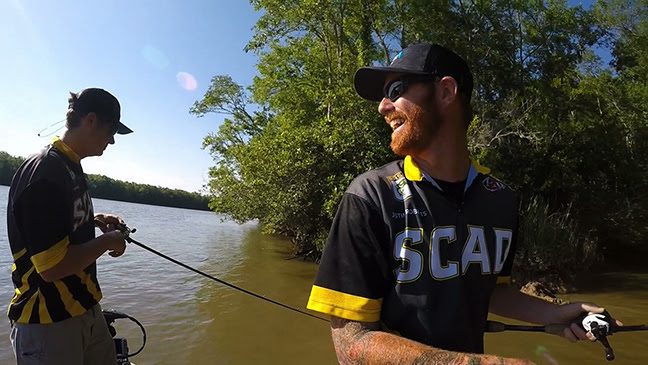
Park Falls, WI (May 30, 2017) – The Savannah College of Art and Design (SCAD) bass fishing program (men’s and women’s) epitomizes how far the scholastic level of the sport has come. Led by full-time coach Isaac Payne – himself an avid angler and former SCAD grad – the team has placed both male and female athletes into several national championships over the past four seasons.

A case in point: SCAD standout Sean Hall – a former High School World Championship finalist attending SCAD through a bass fishing scholarship – has already qualified for every college championship available for the 2017-18 season.

Hall, along with teammate Justin Roberts, are the newest members of the St. Croix college fishing program, poised to make headlines this month at Alabama’s Pickwick Lake, where they’ll compete in the BoatUS Collegiate Bass Fishing Championship, presented by Cabela’s.

The team recently joined forces, and this event marks the first time they’ll compete together.

Collegiate bass fishing is unlike any other sport. Players often have varied backgrounds, and experience levels and practice sessions are anything but textbook. In addition, teammates are frequently paired with little knowledge of the other’s strength and weaknesses, yet their destiny lies in each other’s casts.

Hall and Roberts see little difficulty in their recent pairing, and have spent considerable time preparing for the Pickwick event. “It’s getting to the point where we know each other’s move before it happens” Hall said.

A scouting trip to the lake prior to the off-limits period proved productive, as the team located several schools of bass in shallow waters loaded with spawning shad. While the duo admits such a pattern won’t likely prove productive during the pre-summer event, knowing where a large majority of the bass were previously located could prove helpful when hunting current hot-spots.

SCAD fields both men’s and women’s fishing teams. Photo courtesy of SCAD

As with all SCAD bass athletes, a large percentage of preparation lies in regimented practice periods 2-3 times weekly, led by Coach Isaac Payne. Even Payne, however, cautions against treating competitive fishing like other sports, and focusing solely on the act of playing.

Instead, the mental aspect of practice can often be key, as can orderly duties like boat preparation and tackle maintenance. The key, Payne stresses, is that we’re all students of the game, constantly learning, regardless of skill level or past accomplishments. Payne encourages all anglers on the team to constantly add input, helping broaden the mindset of all players.

Both on and off the water, Hall and Roberts continue to communicate about nearly every variable in their lives, from tests and essay papers due in their classes, to discrete creek channel swings found on topo maps. The two use each other as a sounding board, enforcing the principle that two heads are better than one.

A quick trip to the nearby Savannah River proved a great testing platform for new gear, including St. Croix’s Bass X series and Mojo Bass rods. True to their team-style methods, Hall and Roberts dissect each new body of water by sharing the front deck and fishing rods during practice, allowing each angler to simply pick up and cast whatever’s on their mind at a given time. For the upcoming Pickwick event, that will likely mean cranking ledges, an offshore fishing method where rods featuring forgiving actions often claim the prize. “It’s gonna be all about the Big Crankster” Roberts declared, admitting his favoritism for St. Croix’s 7’8” Mojo Bass Glass model, designed specifically for winding big plugs.

Since the team believes the event will be dominated by offshore cranking patterns and ledge fishing, they’re prepared to spend the majority of their practice time off-shore. After power-fishing with cast-and-retrieve style baits, however, the pair plans to mop up more bass with a swing-head jig. The technique was responsible for a recent high finish for Roberts, and has become a major confidence builder on Tennessee River impoundments. Here, the Bass X 7’1” medium-heavy casting rod, with a faster action, will get the nod.

Think, test, tinker, repeat. As the team of Sean Hall and Justin Roberts focus on the fishing, they’ll need not forget the primary reason they came to SCAD: a degree from one of the premier design schools in the country.

Again unlike other collegiate sports, competitive fishing often requires athletes to be away from class for a week at a time, resulting in major strains on their schedule. Coach Payne turns up the heat, requiring a 3.0 GPA to stay eligible for his travel team; today, the SCAD men’s bass team carries a cumulative 3.3.

In the end, Sean Hall and Justin Roberts are ready. They’ve prepared tackle, discussed a game plan and worked ahead in class. Equally important, this unique new division of competitive bass fishing has prepared them for the real-world, through team building exercises that are far more fun than just sitting in class.


#stcroixrod


Convert Lookers to Biters with the Rapala® Slab Rap® Posted on May 23, 2017 by Rapala

Convert Lookers to Biters with the Rapala® Slab Rap®

[print_link]

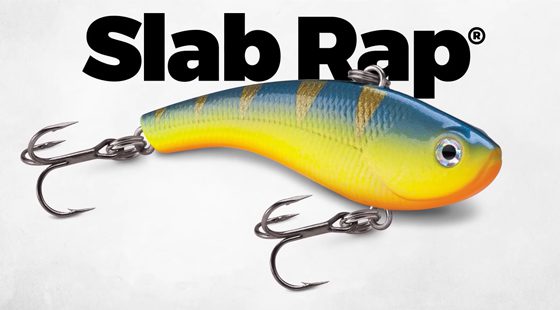
Getting too many snags or short-strikes? Lace up a Rapala® Slab Rap® to keep your bait off the bottom and convert lookers to biters.

“What I like about Slab Raps is they’re a lot lighter and fall slower than a Rippin’ Rap®, but trigger bites with a similar sound and action,” says Tony Roach, an in-demand Minnesota fishing guide and media personality. “If the fish are following Rippin’ Raps but just won’t commit, I’ll downsize to a Slab Rap. It’s one of those versatile baits that just catches everything that swims – from panfish to pike, from walleyes to smallmouth bass.”

Roach calls the Slab Rap “more of a finesse-style lipless crankbait.” In addition to being “not quite as aggressive on the fall,” he says, “it’s got a little sleeker profile; is more streamlined.”

When reeled in with a lift-drop cadence, a Slab Rap will vibrate subtly on the rise, then search in erratic directions, circling back to center on a slack-line fall. “More times than not, those fish will smack it on the fall,” Roach says. “Its center line tie and weight-forward design enables a rocking action to further trigger bites from negative fish.”

Roach often slings Slab Raps around hook-grabbing bottom structure and cover like rock piles, moss and zebra mussels, when water temps are cooler than usual for the season and on mornings when fish not quite as aggressive. “You can kind of yo-yo it rough the structure without getting hung up,” he says.

The 2-inch Slab Rap weighs 1/4 oz. The 1 ½-inch model weighs 1/8 oz. Each comes armed with two No. 12 VMC® Black Nickel Round Bend Hooks. They’re available in 10 color patterns: Chrome, Chrome Blue, Gold Chrome, Glow Hot Perch, Glow Tiger, Green Tiger UV, Glow Yellow Perch, Orange Tiger UV, Pink Clown, Pink Tiger UV.

War Eagle Buzz Toad Review By Jason Sealock – May 25,2017

War Eagle Buzz Toad Review

Jason Sealock

May 25,2017

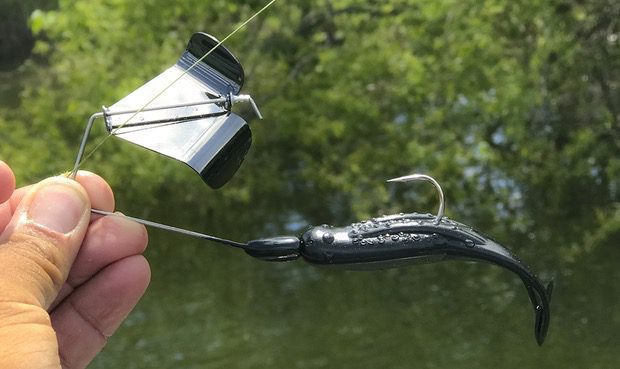
The compact profile of the War Eagle buzzbait and Zoom Horny Toad makes it a great fish catcher.

“You should throw a buzzbait.”

That was the advice I got from Terry Bolton on the phone this spring while he was off fishing an FLW Tour event in March. I of course didn’t throw one. In April, the next time we fished, he picked up a buzzbait and proceeded to crush nice bass on it during our filming session. I quickly tied on the War Eagle Buzz Toad buzzbait and proceeded to crush them myself.

I actually grew up fishing buzzbaits on the Arkansas River and in Florida. In fact, it was my favorite bait for catching big bass growing up. But, I’ve been on about a 10-year hiatus from throwing it. But now the resurgence of buzzbaits with plastics rather than skirts has brought them back into favor so I spent a month throwing the Buzz Toad and rekindling an old fire.

Bryant Copley & Mike Compton Win Leesville lake Tournament Trail May 28,2017

We had 17 Boats competing in today event congratulations goes out to the follow teams.

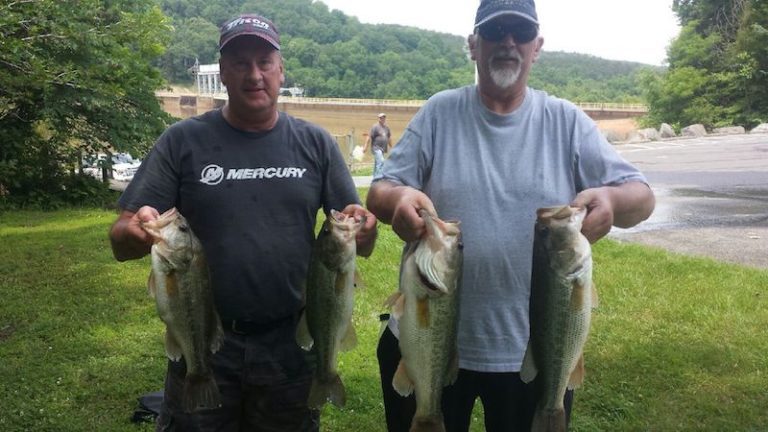
1st Place Bryant Copley & Mike Compton with five fish weighing 20.51lbs

2nd Place Steven Costa & Ryan Rugeri with Five fish weighing 18.24lbs

Third Place Travis Owen & Shaun Gunter with five fish weighing 15.74lbs

Lunker of the Day went to Roger Dollan & Roger Dollan Jr a 6.67lb Large Mouth.

The Good, the Bad, and Change By Bruce Callis May 27,2017

The Good, the Bad, and Change

By Bruce Callis May 27,2017

[print_link]

The Toyota Bassmaster Texas Fest benefitting the Texas Parks and Wildlife Department was an exciting tournament, producing some rather impressive bags. For 4 days the Elite Pros caught a total of 1404 bass out of a possible 1405 for a full limit, with day one being the only day not every angler made his limit. And it was the first time that the Elite’s used live scoring to weigh in every fish. The anglers were also only allowed to bring bass that measured 21 inches in to the official weigh-in each day.
Day 1 had Brent Ehrler taking the early lead with an impressive 25 pounds 6 ounces and a lead of 15 ounces over Brandon Palaniuk. Randy Howell, Hank Cherry and Cliff Crochet rounded out the top five with Cliff only being less then 2 pounds back. Only 18 anglers had a 20 pound bag that first day.
Brent held on to his lead on day 2, but Brandon had cut it down to just 2 ounces. Jacob Wheeler moved himself up into third with an impressive 23 pound 7 ounce limit. Randy Howell dropped to 4th and Greg Vinson moved up to round out the top five.
The field was cut down to the top 50 anglers for Day 3, and saw the lead once again change hands. Behind a 24 pound 7 ounce bag, Brandon Palaniuk retook the lead over Brent Ehrler by 2 ounces to set up what seemed to be a real shoot out for day four. Hank Cherry jumped back into 3rd place, but was 10 pounds and 4 ounces out of first. Jacob Wheeler dropped to 4th and Jason Christie moved up 5th place, 12 pounds out of first.
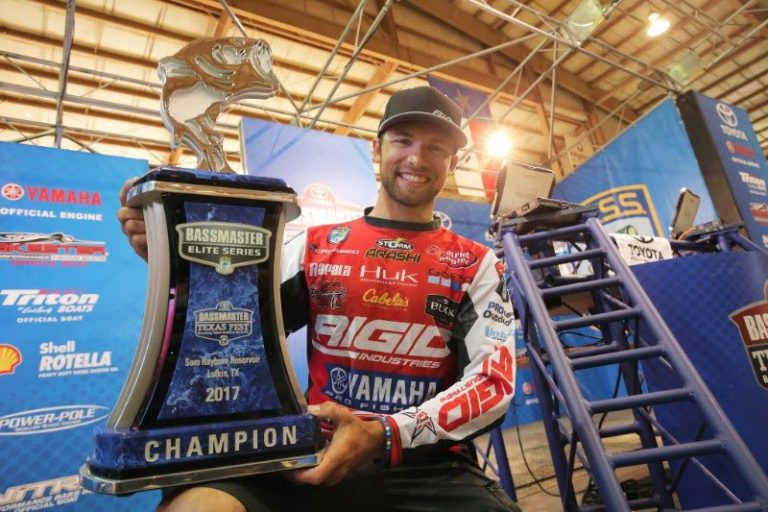
After a day off, which is not the norm for the Elites, the top 20 headed out to do battle. It all came down to Brent Ehrler weighing in 19 pounds 12 ounces and Brandon sweating it out as the scales settled on 21 pounds 12 ounces, earning him a 2 pound victory and an automatic berth in the 2018 Bassmaster Classic. In addition, he also earned a $100,000 paycheck. Brent took home $34,000 and a brand new Toyota Tundra pickup truck worth $50,000 for having the Toyota Big Bass on the event, a 9-1 largemouth caught on day one. Jason Christie finished 7th, but more importantly, came away with a solid lead in the AOY (Angler Of the Year) race.
Is this the future of the Bassmaster Elite tournaments? The walk up on stage to hoist your bag, good or bad, high for everyone to see replaced by only certain size bass being allowed to the official weigh in? Are the days numbered where every angler gets to be on stage? The live on the water weighing of the fish makes it exciting for television, but what does it do for the live weigh-in each day. The crowds were thin at the weigh-in at Texas Fest. The format may be great for Major League Fishing, where total fish caught weight is the format, but it doesn’t work for the Elites! Who wants to go watch a weigh-in where you may see 15 bass among the top 50 anglers? Or the final day, who wants to see 10 bass among the top 12? I know I don’t like it. But it does add to the excitement. Maybe cutting off the live weighing part of the day 4 hours before the official weigh-in? Things change all the time, but how far is too far?