
Thursday, December 18, 2025
Home Blog Page 1114

A living slice of fishing Americana, Dan Johnston embraces new title at St. Croix Rod

0

Born in the USA…like the rods

A living slice of fishing Americana, Dan Johnston embraces new title at St. Croix Rod

[print_link]

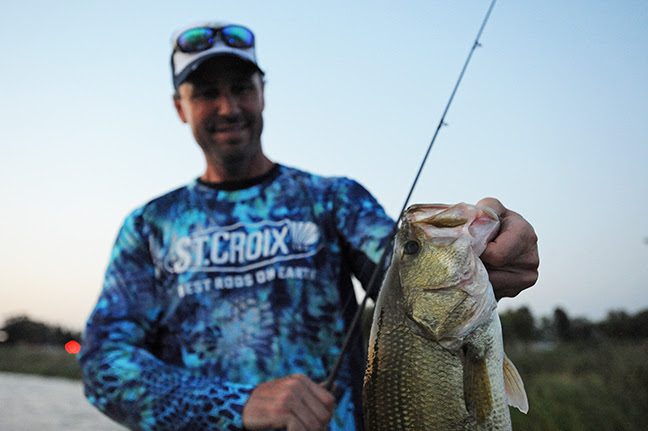
Park Falls, WI (December 21, 2016) – He’s been designated a franchise player and bestowed a new title – making him essentially unrecruitable to the competition. St. Croix Rod road-warrior Dan Johnston’s rank has been raised to National Accounts Manager, and the position fits him like a rod in a travel sleeve.

“Among other duties, Dan’s primary responsibility will be managing select key accounts while working closely with our field sales team,” said a jubilant Jeff Crockett, St. Croix’s Director of Sales. “Dan’s level of professionalism, extensive product knowledge and proven track record will be a tremendous benefit to the members of our team and our customers.”
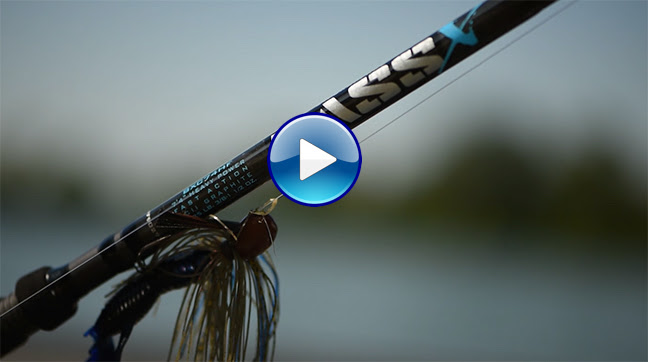
Dan Johnsston breaks down the benefits of the new BASS X series.

Johnston’s new moniker goes live January 1, 2017, exactly 16-years, to the day, his journey with St. Croix began. His commitment to the fishing industry began much earlier, though. Back in high-school, the infinitely energetic Johnston hustled fishing gear and taught fly-fishing at Iowa City, Iowa’s Fin & Feather, a steadfast St. Croix dealer. This, while Johnston fished bass tournaments when he was off the clock. Higher learning called, and Johnston bid farewell to the sporting goods outlet to attend college, only to return as store manager, accentuating his lifelong hunger to be a positive force in the sport he cherishes.

“I’ve been stereotyped as a fly-guy, but I have equal passion for the entire spectrum of fishing,” said Johnston, who is similarly comfortable teaching the arts of ice fishing and skipping baits under docks for bass. “It’s my love for all things fishing that make me a perfect fit for St. Croix, a company that excels at building rods for all fishing pursuits.”

But what makes Johnston glow the most about St. Croix? The culture. “It’s a true family; totally unique in the fishing industry. We’re an extremely tightknit group.
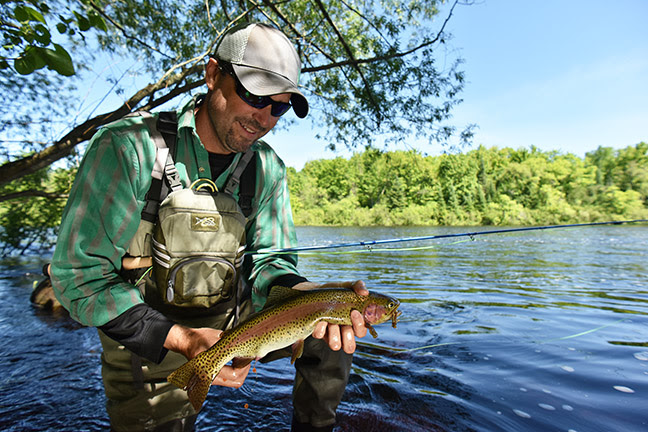
“I like to say the only thing missing at St. Croix is the big black lab waiting to greet you at the door.” Be careful what you wish for, Johnston, because a kennel of lovable labs isn’t out of the question if St. Croix thinks it’ll make happy customers even happier.

St. Croix is driven by product development, and Johnston is a major contributor to that process as well. “The sales team is a conduit to the engineering department, bringing all kinds of ideas and needs from the field.” Valued St. Croix team players like the Southeast’s Randy Hamilton, Northeast’s Dave Colley and Midwest’s Dave Lofgren bring concepts from their territories, while internally, fishing-fanatics the likes of Rich Belanger and new Marketing Director Jesse Simpkins tap the minds of St. Croix’s skilled pro staff.

In short, nobody is left out of the product development process.

Johnston’s new role will also include amplified interaction with media outlets, like Lindner’s Angling Edge. Johnston has become instrumental on the promotional side as a key spokesperson for the St. Croix Rod brand. His expertise and passion are evident in scores of videos, like Johnston’s work on the new BASS X, SOLE fly rod, Legend Glass and Mojo Bass series’ promotional pieces.

Another 16 human years would make Johnston, well, extremely old in black lab years, but odds are St. Croix will be leaving the light on for a long, long time. And Johnston will always come home.

#stcroixrod
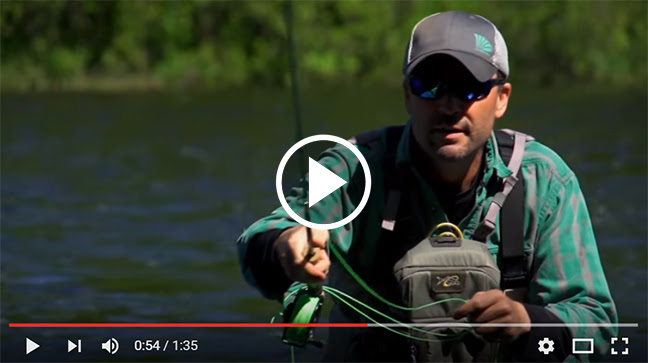
Expert fly-fishing instructor, Dan Johnston was instrumental in the launch of ICAST award-winning SOLE.
Premium Cooler and Drinkware Brand Agrees To Multi-Year Deal, Becomes Title Sponsor of FLW College Fishing

FLW ANNOUNCES SPONSORSHIP AGREEMENT WITH YETI®

Premium Cooler and Drinkware Brand Agrees To Multi-Year Deal, Becomes Title Sponsor of FLW College Fishing

[print_link]

MINNEAPOLIS (Dec. 21, 2016) – Fishing League Worldwide (FLW), the world’s largest tournament-fishing organization, and YETI®, a leading premium cooler and drinkware brand, announced today a multi-year sponsorship agreement, including title sponsorship of the FLW College Fishing series. Terms of the agreement were not disclosed.

In addition to their title sponsorship, YETI will receive exposure across multiple FLW platforms, including more than 235 tournaments and Expos, FLW Bass Fishing magazine, FLWFishing.com, newsletters, social media outlets, and the Sports Emmy-nominated “FLW” television show.

“As the interest and popularity of College Fishing continues to grow, we’re excited to start our partnership with YETI, a brand known for their creativity and innovation,” said Trish Blake, FLW President of Marketing. “The team at YETI is committed to helping expand the sport at the collegiate level and leverage the FLW brand to increase their reach across all channels.”

The 2017 YETI FLW College Fishing series features three regular-season tournaments in each of the five conferences – Central, Northern, Southern, Southeastern and Western – along with the annual College Fishing Open. Top teams from each conference’s regular-season tournaments and the annual FLW College Fishing Open advance to the YETI FLW College Fishing National Championship.

“We’re extremely proud to be the official sponsor of the FLW College Fishing series,” said Corey Maynard, Vice President of Marketing at YETI. “YETI is dedicated to the expansion and progression of tournament fishing, and we look forward to multiple years on the water with collegiate anglers.”

College Fishing is free to enter. All participants must be registered, full-time students at a college, university or community college and members of a college fishing club.

The 2017 YETI FLW College Fishing series will kick off on Jan. 14 at Lake Seminole in Bainbridge, Georgia.

About FLW

FLW is the world’s largest tournament-fishing organization, providing anglers of all skill levels the opportunity to compete for millions in prize money in 2017 across five tournament circuits. Headquartered in Benton, Kentucky, with offices in Minneapolis, FLW conducts more than 235 bass-fishing tournaments annually across the United States and sanctions tournaments in Canada, China, Mexico, South Africa and South Korea. FLW tournament fishing can be seen on the Emmy-nominated “FLW” television show, broadcast to more than 564 million households worldwide, while FLW Bass Fishing magazine delivers cutting-edge tips from top pros. For more information visit FLWFishing.com and follow FLW at Facebook, Twitter, Instagram, YouTube and Snapchat: @FLWFishing.

About YETI

Founded in Austin, Texas in 2006, YETI is a leading premium cooler and drinkware brand. The world’s top hunters, anglers, outdoor adventurers, BBQ pitmasters, and ranch and rodeo professionals trust YETI to stand up to the world’s harshest conditions. For more on the company and its full line of products and accessories, visit yeti.com.

Is the Spinnerbait an outdated way of catching big bass?

Ben Hudson – “Blue Collar Bassin’”
TheBassCast.com

The legendary lure of the early 80’s & 90’s
Is the Spinnerbait an outdated way of catching big bass?

[print_link]

If you’re an angler in their mid-20’s like me, then you grew up watching cassette tapes of The Bassmaster’s on TV in the early 90’s and on the old TNN Outdoors channel. Even rewinding the tapes to shows of the tournaments fished in the late 80’s and all through the 90’s where bass fishing was something a kid dreamed of one day as we would watch our heroes weigh in big bags of bass on TV. It was the golden days of bass fishing for a 90s kid like me where we all dreamed of being on the stage and hearing Ray Scott call out our name and talk about our big bag of bass.
As a kid watching these pros at work on TV, it became clear to me they all seemed to have one common lure that was universally used. It worked week after week no matter which lake they seemed to travel to: the Spinnerbait.

000142649_original_650x650
Spinnerbaits were a staple in this age of bass fishing. From the classic pros like Jimmy Houston and Hank Parker, to the newer guys like Kevin VanDam who just emerged onto the bass fishing scene at the time, the spinnerbait was the go to bait in those days. I still can see very clearly in my mind the images of Gary Klein and Jack Hains weighing in 18-20lbs of bass on Buggs Island Lake (a lake nearby to me) all on the spinnerbait. It seemed like the most versatile and consistent bait ever created and I couldn’t help but wonder why it wasn’t being used in modern times like it was in the 90’s?

ray_scott_bass_fishing
Let’s fast forward back to the present day. The spinnerbait is nearly non-existent on the pro tour in most cases. New age styles and baits such as underspins, umbrella rigs, swimbaits, drop shots, and shaky heads rule the bassing world. How can such a successful bait fall off the map like it did over a period of 10 to 15 years? Is “the blade” truly an outdated lure?
Absolutely not, the spinnerbait can be just as effective as it was in the 90’s. There is however, a major difference that has caused the bait to decline from the top of the bassing world.
Possibly the biggest factor that made the spinnerbait decline from greatness in recent years is the cleaning of our lakes across the United States. The major lakes across the country have received much work in the last 10 to 15 years resulting in more recreational lakes with much less stained water. Many of them having filters installed on the dams to remove debris. This has caused many lakes to become clearer water tributaries, which in no way favor the spinnerbait.

stanley_vibrashaft_spinnerbait_1267145_6_og
This cleaning effect combined with the new age baits that have emerged to the “oohs” and “ahhs” of bass anglers everywhere have definitely cut down the spinnerbaits tournament wins. As a fairly bulky bait with lots of sound and flash from the blades, it can spook fish in the clear water and where bass are heavily pressured by more finesse techniques.
So where does the spinnerbait find its role in today’s age of bass fishing? It is definitely still an effective way of catching bass, it just has to be used more carefully in the right conditions. Stained water is definitely the best place to look to throw a spinnerbait if you happen to find it, particularly if you are on a river system or way up a river system connected to the lake you’re on. Sometimes this isn’t enough, on its own the spinnerbait more times than not requires wind to be effective. Moderate to extreme winds help mask the spinnerbait making it easier for bass to confuse for a baitfish, and the flash of the blades also make it easier for a bass to find in heavy winds where finesse baits may get lost in the crashing waves and churned up water.

Zack
In the 90’s, the spinnerbait was often used to cover water since it could be fished in heavy cover, rocks, or even grass. While it still has this versatility today, it is used much less frequently due to the changing water conditions and pressure the new age baits have put on bass. FLW pro Zack Birge made it obvious to everyone recently how effective the spinnerbait can still be, as he roared to an FLW victory on Wheeler lake using old school spinnerbait tactics to pick apart wood structure on the Elk river section of Wheeler. This proved the theory even more that the spinnerbait is still effective if used in the correct situations.
It may not be the lure every pro has on deck tied to their favorite rod like it was in the early 90’s, but the spinnerbait is still relevant if used in the right condition. It’s just not as straight forward as it was in the 90’s. If used in the right conditions though, ideally wind and stained water, the spinnerbait can still load your boat with a big bag of bass.
Before you write off the magical bait of the 80s and 90s, remember all baits have their place in today’s modern bassing world, even if it doesn’t work the same way it did in the past. So next time you’re fishing your home lake on a cool spring morning, and see the water a little stained with some wind, Tie on that old school spinnerbait and you may just relive the golden age of the Bassmasters.

Ben Hudson, Pro Staff
“Blue Collar Bassin’“
TheBassCast.com

Potential world record spot caught December 19, 2016 BASSMASTER.com

0

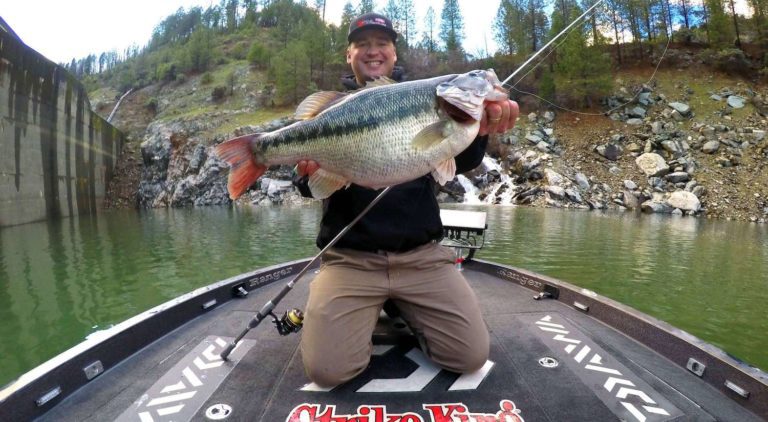
Cody Meyer caught a 10.80-pound spotted bass that is the potential world record. The behemoth spot was caught on Dec. 16, 2016, from Bullards Bar reservoir, a famed spotted bass fishery in northern California.

“JR Wright and I had caught three really big spots that day (6.66, 8.35 and 7.74 pounds). Then I marked one single big fish on my electronics. It was suspended about 20 feet down over 100 feet of water. I cast my Ocho to it, let it sink and then my line jumped” he said recollecting the bite. “It was immediately obvious that it was another big one, but it wasn’t until I saw her that I actually realized how big she was,” said Meyer, a Strike King and FLW pro. He has also fished in seven Bassmaster Opens.

“We caught four of the five on a wacky-rigged Strike King 5-inch Ocho in the KVD Magic color. The fifth fish came on a 3.75-inch Strike King Rage Swimmer rigged on a 1/2-ounce Squadron Head Jig. For the Ocho, I was using Daiwa spinning gear, with a main line of 15 pound Seaguar Smackdown braid and a 6 pound Seaguar Tatsu leader. I rigged the Ocho on a size 1 Owner Mosquito Hook. That setup is my go-to when fishing for those big spots,” says Meyer, who lives in Auburn, Calif.

The California Fish and Game Dept. officially recorded the weight and details of Cody’s catch on-site. Once all the appropriate paperwork is filed, The Department will make the determination if this bass will unseat the current record of 10.48 that was caught in 2014.

Three anglers score “fishing first” in NW Ontario via Old Town® Predator PDL™ kayaks

0


Canadian Fly-In Fishing By Kayak

Three anglers score “fishing first” in NW Ontario via Old Town® Predator PDL™ kayaks

[print_link]
Old Town, Maine (December 19, 2016): Three anglers. Three days. 13 muskies. Countless big brown bass. Multi-species mayhem. The fishing trip of a lifetime.

There aren’t many “fishing firsts” left to achieve. Sure, species records are routinely set and broken, but most of what can be done, has been done. There are few new territories to explore.

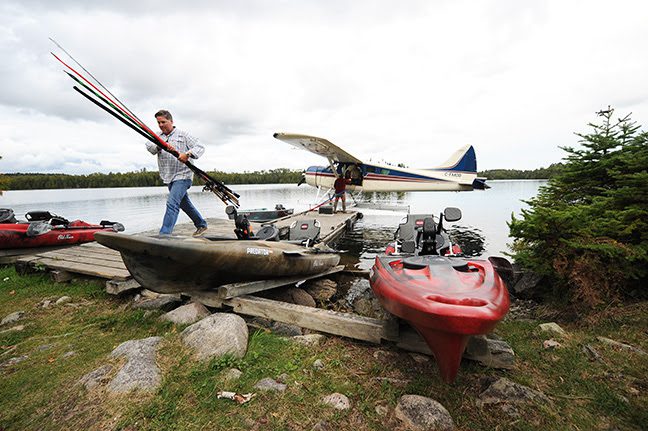
Enter three intrepid anglers and a unique expedition to fish the remote fly-in-only waters of Northwest Ontario’s Sunset Country in pedal-driven kayaks… finding and catching fish with their feet… a legitimate fishing ‘first.’

With the help of Nestor Falls Fly-In Outposts, these fish-heads brainstormed a new, repeatable quest for other anglers, a contemporary take on the classic Canadian fly-in canoe fishing trip—but with the benefit of amazing engineering and unrivalled small watercraft boat control for hands-free fishing.

The adventurous anglers quickly discovered the Old Town Predator PDL a perfect boat to quickly reach (up to 5.5 mph) and efficiently explore every nuance of the untamed Canadian waters. From precisely positioning off rock islands, reefs, and weed beds, to trolling craggy shorelines and big-fish holding breaks along towering cliffs, the Predator PDL surpassed every criteria for fishability, including reverse pedal motion when they needed it to fight muskies away from cover.

Whether slinging Giant FlatSticks or flinging flies, the crew also spent a lot of time standing and fishing, eyes glued to the gin-clear depths for muskie follows.

“I was floored by the Predator PDL,” says Grant Prokop, muskie guide and owner of Thousand Lakes Sporting Goods in Cohasset, Minnesota. “We pedaled 8-12 miles a day but it didn’t seem like exercise at all, even crossing large open-water stretches in head wind. I didn’t miss anything from a big multi-species boat… the fishability and stability was just incredible. I could even figure-8.”

Considered by many the fish of 10,000 casts, muskies are notoriously hard to catch… but not so much on NW Ontario waters, as Prokop describes.


“I completely lost track of how many muskie follows we had. The three of us caught 13 in three days, which is just ridiculous. It’s pretty amazing what these fly-in lakes offer in terms of numbers. Although we didn’t land any toothy-critter past the mid-40-inches mark, we did see some bigger fish, which makes me want to go back soon!”

Hard to believe, but the gang found a lot more than muskies. Big smallmouth bass attacked X-Raps with pugilistic intensity—and a couple 20-plus-inchers were actually caught on muskie baits.

“It was a dream fishing trip, where everything came together perfectly,” says fishing writer Jim Edlund. “We’ve all been on enough trips that don’t necessarily go that way, so when they do they’re especially memorable. The multi-species action was incredible, from our very first cast to the last. And, to be honest, the fish were a bonus to the serenity of the place, the northern lights, loons, eagles, and Canadian shore lunches… it was all there… the stuff you read about in magazines as a kid come to life. And it’s cool to have been part of the first group of anglers to do a Canadian fly-in with pedal-driven kayaks. I can’t think of a better way to explore and fish remote waters. I think this opens up a whole new way to do fly-in trips.”

About the Predator PDL

  • Length: 13’ 2”
  • Width: 36″
  • Weight: 117 lbs. (Pedal Drive: 21 lbs.)
  • Carrying Capacity 500 lbs
  • Forward and reverse for exact boat control in wind and current
  • Smooth, quiet and easy to pedal
  • Removable PDL Drive installs in seconds and tips up instantly for shallow-water docking
  • Fast and maneuverable, with one-hand-operated rudder steering
  • Specially-designed hull with generous width for stability and storage
  • Includes accessory mounting plates, Element Seating System and other standard Predator features
  • Ease of transport
  • Low maintenance

MSRP $2,799.99

Like other Predator models, the Predator PDL is infinitely customizable with rigging accessories from Cannon®, Scotty™, YakAttack®, RAM®, and more.

Louisiana-native tops the world’s best kayak anglers for a Made in USA crown

0


Lessard Wins Kayak Championship for USA

Louisiana-native tops the world’s best kayak anglers for a Made in USA crown

[print_link]

Park Falls, WI (December 19, 2016) — The most international title in fishing is headed home to America, after Steve Lessard took home his second Hobie Fishing Worlds in his home state of Louisiana. Anglers from five continents competed in a fierce field of 49 for a shot at kayak fishing’s crowning achievement.

“It’s intimidating,” says Lessard. “You’ve got these guys from around the world coming in with beautiful, hand-painted lures. They’re fishing with custom made rods and $500 reels, and they’re all super-skilled. A lot of them are multi-species masters, with hundreds of species under their belt.

“Transitioning to redfish in Louisiana is not that hard for them.”

To level the playing field, Lessard loaded his kayak with a one-two punch from St. Croix Rods.

lesared-wins

The tournament took place over three days, with each angler measuring one red and one trout per day. And with a loaded field, Lessard relied on a variety of strategies and techniques to get the job done, from Carolina-rigging to topwater popping corks. Lessard’s weapons of choice? A medium-action 7’6” St. Croix Avid Inshore to reach out and hit big reds; a medium-light St. Croix Legend Elite for cracking finicky trout on topwater.

“The Legend Elite is perfectly suited for a small topwater lure,” Lessard says. “The Legend Elite really helps me keep those trout hooked-up. Redfish have a tendency to somehow miss the hook or come off once they get hooked on a treble, but the Legend Elite keeps them on and buttoned up. My first fish of the tournament, on Day One, came off that rod.”

But Lessard wasn’t only fighting finicky trout and a bevy of international competitors. At this world championship, he was fighting vicious weather from a ripping north wind and rapidly flowing currents that took the marshes out to the Gulf of Mexico at 5 mph.

“The wind was horrible on Day Two,” he adds. “I took a chance and gambled on going south, even though not many people were doing that because the current made it nearly impossible to come back north. And, I could only get so close to the big reds when they’re on a flat that’s two feet deep. Otherwise, you start pushing mud. So, I was literally making 100 foot casts to reach the fish. That long rod, the Avid Inshore, really lets you cast the bait out there. And I can set the hook all the way out using a popper on braided line with no problem.”

legend-elite

Masterminded for freshwater fishing, cherished by secret society of saltwater anglers, the Legend Elite lives as a culmination of St. Croix’s finest materials and technologies.

Day Three saw Lessard in pole position, 10-inches ahead of Australia’s 2013 Hobie World’s Champion Richard Somerton. But with a 15 degree drop in water temperature, the stage was set for a tough day on the water to bring home the gold.

“The pressure was really on then,” Lessard tells. “I had everybody in the state of Louisiana rooting for me. I had radio shows calling me with sportsmen listening in all over the state. Richard Somerton and I were going head to head. I was trying like heck to defend our home water for the USA, and we were both trying to become the first to win two world championships.”

Following an early morning finesse pattern that landed his keeper trout on an extremely slow-rolling swim bait, Lessard ventured out for the kicker fish—a bull red—to put away the victory.

“I saw one on the flats, and I made a long, 80 foot cast to reach him. Then, I started feeding the line out, letting the wind carry my cork into position. I gave it subtle, slight pops and when I got close to where I saw the fish, the cork went under. I guarantee you that I had 120 feet of line out on that 7’6” rod when he hit. And after a battle that took us from a flat to a ditch to the main canal, I was able to pull him in—a 27-inch red. At that point, I almost lost it. I knew I had 46-inches for the day and that Richard would need 56-inches to beat me.”

Somerton wouldn’t make it. The revered Aussie tallied in 16-inches behind the American, and Lessard took home his second world title.

When asked to compare his Louisiana win with his 2014 title in Holland, Lessard brought it all back home. “In Holland, I imagined the pike as redfish,” he says. “I would imagine myself in a Louisiana Marsh…and the situation worked out really well for me. Back then, I actually borrowed a three-piece St. Croix travel rod to help me win it.”

Mr. Lessard, we’re imaging a three-pete, St. Croix Rods front and center. We’re proud that you’re using the “Best Rods on Earth”…

australian-richard-somerton

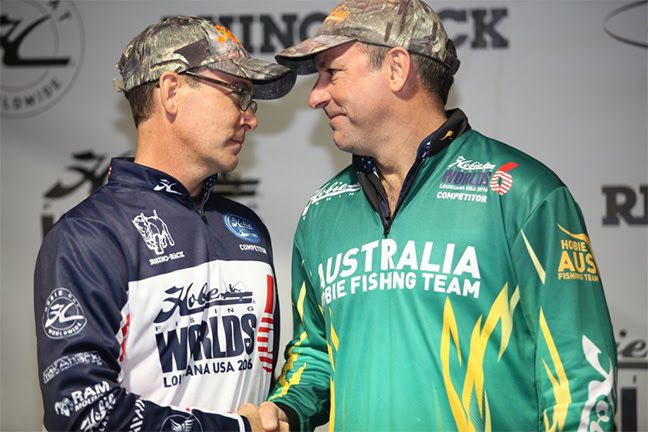
Somewhere between friendly and fierce, Lessard exchanges a handshake with second place finisher, Australian Richard Somerton, another passionate St. Croix user.


Bass Edge’s The Edge – Episode 245 – Cliff Crochet

Bass Edge’s The Edge – Episode 245 – Cliff Crochet
December 1, 2016
2016 BASS Central Open Champion-Atchafalaya Basin and 2017 Classic Qualifier Cliff Crochet is featured on Bass Edge Radio presented by MegaWare KeelGuard. Cliff chats with Aaron and Kurt about is deep south fall and winter fishing tactics as well as making the most of your practice.

images-1

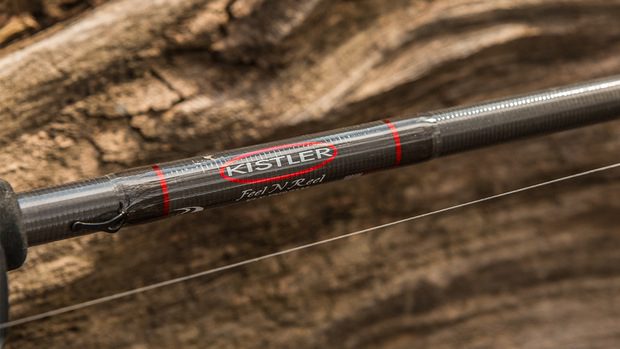
First Look: Kistler KLX Feel N Reel Series Casting Rod By Walker Smith December 13,2016

0

First Look: Kistler KLX Feel N Reel Series Casting Rod

Walker Smith

December 13,2016

With a blank weighing less than 3 ounces, this new bass fishing rod maintains the light weight of graphite and prodives the softer power of fiberglass.

I’ll be totally straightforward: I’ve had my eye on this rod ever since I heard about it at ICAST 2016. I’m a big-time crankbait fisherman—I prefer to crank over any other technique. I’ve done extensive research, field testing and product development throughout my career on every modern-day cranking component including lure shapes, lip angles, hooks, reels, line and especially rods.

After several months testing this rod in a myriad of different situations, I can comfortably say that it’s one of the best crankbait fishing rods I’ve ever used.

Here are my full thoughts on it.

images

Why Aaron Martens Likes a Short Drop Shot Leader By David A. Brown – December 12,2016

0

Why Aaron Martens Likes a Short Drop Shot Leader

David A. Brown

December 12,2016

Aaron Martens, considered to be the best with a drop shot, explains why a short leader is better this winter.

When the world’s greatest drop shot angler tells you he likes super short leaders, there’s a lesson worth noting. Aaron Martens draws a clear parallel that explains how proximity to the bottom yields a strategic impact on his drop shot presentation.

“A short leader gives it a quicker bounce,” he said. “It’s like dribbling a basketball; if you dribble it standing up, the ball moves slowly, but if you get closer to the ground, it tightens up. It’s the same with a drop shot; you get a quicker ,smaller action in the worm.”

images

Water Bill Contains Troubling Language For California Delta Bass Anglers

0

Chris Zaldain landed a 12-pound largemouth during the Bassmaster Elite Series event held on the Sacramento River and California Delta in 2015. The fishery is known for producing big limits of giant bass.

Photo by Seigo Saito, B.A.S.S.

Dec. 14, 2016

Water Bill Contains Troubling Language For California Delta Bass Anglers

[print_link]

BIRMINGHAM, Ala. — The United States Senate recently passed a comprehensive new water infrastructure bill, containing language that will likely be alarming to be many bass anglers — especially those who value the incredible fishery on the California Delta.

The Water Infrastructure Improvements for the Nation Act (WIIN), which passed the Senate by a vote of 78-21, had already been approved by the U.S. House of Representatives earlier last week and is now awaiting President Barack Obama’s signature.

While it contains many positive elements pertaining to water diversion in treasured American waterways like the Florida Everglades, a line buried in the massive document calls for federal and state conservation officials to “remove, reduce or control the effects” of several non-native species in the California Delta. The list of species features 10 fish, including the largemouth bass, smallmouth bass and striped bass.

The move could have dire consequences for a bass fishery that is known as one of the nation’s best.

“We’re not just talking about eliminating creel and bag limits like they’ve done on the Columbia River (in Oregon),” said Gene Gilliland, B.A.S.S. national conservation director. “They’re talking of going way beyond that now. There’s talk of spraying aquatic vegetation and destroying habitat that’s used not only by bass, but my many other types of wildlife as well.

“If they start destroying habitat — congregating fish into one small area — and then start using nets and electrofishing boats to remove fish, it would be an awful scenario.”

The California Delta is a vital spawning pathway for multiple species of salmon that are prized by the commercial fishing industry. The salmon — many of which are listed as endangered species — migrate from the ocean up the Sacramento River and its tributaries to spawn. Then the juvenile fish have to make their way back out to the ocean through the river.

Many with an interest in the salmon industry have long believed that largemouth, smallmouth and striped bass greatly reduce the salmon population by eating those juvenile fish. But studies have shown that bass prey on a very small percentage of the salmon fingerlings, Gilliland said.

The salmon runs have been heavily affected by dams and water diversion for farming purposes.

B.A.S.S. and other conservation entities, including the American Sportfishing Association (ASA), have expressed concern in recent days that the language about non-native species was added to an important piece of legislation — a mammoth document — almost as a hidden footnote to appease the pro-salmon crowd.

“I think that was put in there to be politically correct,” said Gilliland, who also serves on the Government Affairs Committee of the ASA. “They want to do what they can to protect those salmon runs and bring them back. They have a big economic impact in not just California, but some of those runs provide for commercial fishing all the way up the Pacific coast. There’s obviously a huge value to that.

“But there’s also value to the recreational fishing side of it for stripers and bass and catfish and other non-native species. Congress is not valuing that any. To people who care about those other species, they’re basically saying ‘We don’t care about you.’”

Gilliland said several alternatives have been recommended that would not require the eradication of non-native predators, but all were dismissed.

“A lot can be accomplished on this front with water diversion and timing of the releases out of the dams in regard to where the salmon are in their run,” Gilliland said. “There needs to be some strategy in terms of when they stock salmon versus where the bass are, depending on seasons. That’s also a big thing.”

Earlier this year, a petition was filed by the California agricultural industry aimed at removing bag and length limits on black bass in the Delta. That plan was defeated by a coalition comprised of B.A.S.S., the ASA, the California Sportfishing League, Coastal Conservation Association California, Coastside Fishing Club, Congressional Sportsmen’s Foundation, Fishing League Worldwide, the National Marine Manufacturers Association and Water4Fish.

If there’s a silver lining to the new federal legislation, Gilliland said the language added to the bill isn’t as harsh as it could have been.

“The original language called for ‘eradication of non-native predators,’” he said. “But the language that made it into the bill says to ‘remove, reduce or control the effects’ of non-native predators.

“That leaves some wiggle room. We think there are some other alternatives that are built into this process. We need to make sure the powers-that-be are aware of those and that this thing doesn’t just become a runaway train.”

For further information or to arrange an interview with Gene Gilliland, contact JamieDay Matthews, B.A.S.S. communications coordinator, 205-313-0945, [email protected].