
Winter Float and Fly Bass
 The weather is considered by most to be miserable, but cold weather makes excellent conditions for smallmouth bass fishing. Conditions during a weather front can be the best time to be on the water. Rain, wind, fog and cold are all part of winter; however Float and Fly anglers are fishing. This technique can be fished anywhere in the world, when used in water temperatures that are below 50 degrees (10 C) the technique is supreme to other cold water tactics. The success of this tactic is that no other bait resembles a dying bait fish suspended in cold water as realistic. The fly appeals to smallmouth, largemouth and spotted bass as easy prey that they can eat without expelling much needed energy.
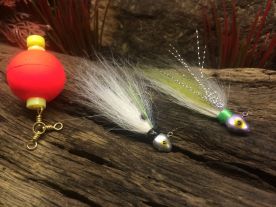
The name Float and Fly is a simple name derived from the two main components of this presentation. A “float” that is a small simple weighted Styrofoam bobber, and the “fly “that is a 1/8 ounce (3.5 g) or a 1/16 ounce (1.7 g) lead head jig dressed with feathers or synthetic “craft hair,” that has a pulsating, shimmering action in the frigid cold water. Float and Fly angler’s fish this combination with long spinning rods, and reels spooled with 4-pound (1.81 KG) test monofilament line.
 The Float and Fly is the legacy of angler and guide, Charlie Nuckols, who later formed the company known as Bullet Lures in East Tennessee; He developed the technique to target winter smallmouth bass. As a young boy, Charlie would fish a small jig for bass in the headwaters of the reservoirs, in the currents. Growing weary of constantly hanging up in the rocks, he began to suspend the hair jigs beneath a bobber to drift them past into the calm areas behind rocks known as eddies. Bass were known to use these areas as ambush points for staking prey. The boy caught many fish with this tactic, and this young man’s innovation was the basis for what later would be known as the Float-N-Fly.
Over the years, Charlie Nuckols perfected this presentation to be used for fishing the deep clear frigid mountain lakes and discovered that the approach was phenomenal for catching suspended smallmouth. This soon led to Nuckols designing and producing “flies” in many different color s and sizes. Before Nuckols tragic accident in a boating accident in 1996 he had founded Bullet Lures in 1986. Other companies such as Punisher Lures, (owned by Stephen Headrick, The Smallmouth Guru, who was friends with Nuckols) is a front runner in the manufacture of Float and Fly equipment and Red Rooster Custom Lures produce quality jigs (used in this post) specifically for the Float and Fly presentation to match the forage in any body of water.

The most productive time to fish the float & fly is during a weather front with some wind, which disturbs the surface and provides wind current and the most difficult time to fish it is on calm, bluebird, clear days. However fishing the steep shaded banks will produce quality bass, but anglers are advised not to expect quantities of fish under these conditions. This technique is the most popular on Tennessee’s Dale Hollow Lake and has spread to nearby reservoir throughout the south eastern United States because the float and fly is very well suited for fishing cold clear water.
To fish the rig, first, position the boat twenty to forty feet (6-12 m) from the water’s edge and then cast the bobber and jig toward the bank and allowing the jig to settle, watching the bobber for strikes. Most strikes are subtle and at other times the bobber is pulled straight down under the surface. Anglers must watch the bobber diligently, it may spin, fall to one side, move, or slowly be pulled beneath the surface. A long soft spinning rod with light to medium action is best suited to cast the long leader of the float & fly rig. To cast, simply sweep the rod back and wait to hear the jig hit the water behind you, and then sweep the rod forward toward your target. The long rod and long leader require “loading up” much like casting a fly rod. Once the bobber has settled, raise the rod tip and start jiggling or vibrating the rod, which makes the bobber dance in one place. This give an action to the jig, suspended below the bobber, it will vibrate and quiver like a dying bait fish. While continuing to twitch the rod tip, keep the slack out of the line and slowly reel the bobber back to the boat. Wind is your friend when using this presentation, as the “bobbing” motion of the waters movement will help to trigger strikes.

Water temperature has the greatest impact on the fishing depth. The water temperatures must be below 50 degrees (10 C), and a confusing fact to many anglers it that the cooler the water, the shallower the fish will be suspending. In early winter, as the water is cooling anglers fish the fly between 11 and 14 feet (3.5 – 4.25 m) deep, but most of the time through the winter months, jigs are fished eight to ten feet (2.5 – 3 m) below the float.
This technique can catch bass all winter long in much of the northern hemisphere. The effectiveness of the float and fly is in no way hampered by snow, severe cold fronts or even low water temperatures. Bass are routinely caught in water temperatures as low as 36 (2 C) degrees. Cold fronts play an important part in this scenario, because the colder water will suspend the bass making them even more predictable. One tip is to enhance the jig by using a quality attractant. Quality attractant contains glitter that gives the illusion of scale flake. The cover scent along with this visual stimulant can bring smallmouth up from the deep to feed on what appears and smells like a distressed bait fish.
You will be amazed at how quickly you can learn the cast with the long leader, how affordable the gear is and how effective this approach is for catching cold water bass. As with any time on the water, play it safe. Wear a PFD and dress in warm layers. Always fish with a partner in the winter do this for safety as well as for support. It is an added bonus to have someone there to get the net for you after a hook up, and to share the experience with.
Happy Fishing!
Red Rooster Custom Baits: http://www.redroostercustombaits.com/
For more tips and tactics please visit our web site at: http://teambilbrey.com/






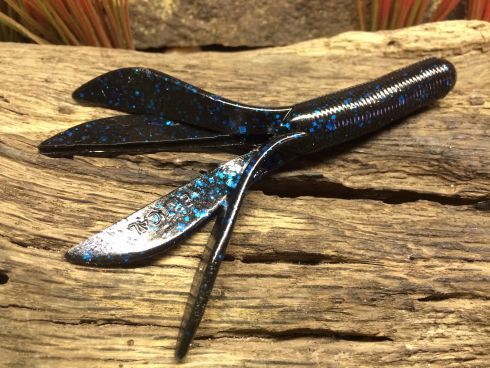
 Soft plastic baits have been part of the fishing industry and in fishermen, tournament professional and guides, tackle boxes since the late 50s. Bass fishermen started with a hook and a worm that was hard and rubbery, lacking silicon, this category of lures has evolved to be more realistic in texture, color and action that better imitates baitfish, worms, lizards, insects, salamanders, craws and other natural aquatic crawly creatures. Innovative companies such as Vertical Lures has taken the soft plastic creatures to the next level in artificial evolution with their Tube-X and Creature-X that are proving their place in the industry one tournament at a time.

 The wait is over. The return of the Creature-X is here. Get your hands on this patented design creature bait to torment bedding bass and X- ‘em big boys out of any cover.



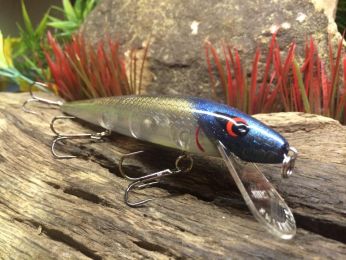
 What is the key to success when fishing a jerkbait in the winter? The answer is learning how to get the right action, the right vibration and a flash that will capture a bass attention. Many anglers guard their secrets for winter fishing while others enjoy sharing some more productive cold-water jerkbait tips. Over the years enough information about these cold water baits has been collected to make cold water fishing as productive for big bass as fishing during spring and fall. The quantity of fish may not result from winter fishing, but the quality of the bass caught is worth the experience.

 Just like a crankbait, a jerkbait can sometimes require a little tuning when they travel to the right or the left uncontrollably. To correct this use needle-nose pliers and pinch the line tie on the nose of the bait. Slightly roll the line tie in the opposite direction of the way the bait is swimming. This adjustment must be made with small increments so not to over correct the travel of the bait. With each “tweak” cast and retrieve the bait. If the bait continues to swim incorrectly, repeat the process until the bait swims true.