10 Tips for Catching Bigger Bass
By Josiah Gaza

Last year in late April, I had an experience that changed the way I bass fish. I was out for a relaxing evening of fishing by myself in my inflatable kayak on a little private lake, and I was throwing my favorite buzzbait. I drifted to the back of a pocket, and I made a really long cast toward the deeper side of the pocket where there were a couple of flooded bushes. I made about 2 turns of the reel, and suddenly an enormous bass smoked my buzzbait. If you’ve ever scared a giant carp, well that’s what the explosion looked like. The bass was so big it immediately started towing my kayak toward deeper water. It took me about 5 minutes to get the fish close to my little boat, and when I saw it my eyes just about fell out of my head and I started praying frantically, “please, God, don’t let this fish get away!” When I finally got a hand on the fish and lifted it in the boat, I started screaming like Mike Iaconelli, and I didn’t stop screaming for probably 5 minutes. The feeling was indescribable. Unfortunately, I didn’t have a scale with me, but the fish was a little over 26” long and had a 20 1/2” girth, so it was easily over 10 pounds. My previous personal best weighed something like 6 pounds.
I absolutely love to bass fish for a ton of different reasons, almost too many to list. But after I caught that fish, one of the main reasons I fished was to try to recapture the feeling of catching that giant bass. The sense of accomplishment and just pure elation I got out of catching that fish was something different than anything I’ve ever felt. So, since that day, a lot of the time I spend fishing is devoted to pursuing big bass. I’ve been fortunate enough to catch several more bass that are trophies for this area, and along the way I’ve learned a lot about how big bass act, and some strategies for increasing the chances of catching one. Now, it should be stated that I’m not a record chaser. I’m not out to catch the world record bass, or even the state record. I just don’t really fish for one or two pounders anymore. So, having said that, here are my 10 tips for catching bigger bass.
10: Understand that big bass get big because they are warier and smarter than the average bass
Big bass don’t just wake up one day weighing 8, 10, or 12 pounds. They take years to get that big, and during that time you can bet your boots that they’ve seen a lot of lures, been around a lot of boats, and probably even been caught a few times. Bass learn through experience, so your average big bass will get the heck out of dodge the minute it thinks there’s a fisherman nearby. I’ve read several studies done by biologists that tag big bass and track their movements, and they write about seeing the GPS signal from a big tagged bass move away when a trolling motor is run near them or even when a depth finder is turned on. The bottom line is that big bass are ultra-sensitive to just about everything a fisherman does, and if you want to catch the big one you have to be stealthy – very stealthy.
9. Understand that big bass live deeper than the average bass
Except during spawning season, big bass are usually found in deep water. I can’t tell you how many fisherman I see pounding away at the banks in the middle of the day in July and August, and while you can definitely catch bass doing that, I almost guarantee you they won’t weigh more than three or four pounds maximum. If you are going to target big bass, especially during the summer months, you need to be fishing deep. A good rule of thumb I once read is to fish at least 4-6 feet deeper than the smaller bass are holding.
8. Understand that big bass are found in out-of-the-way places.
One of the things I’ve found is that many times, big bass hang out in places your average fisherman won’t fish most of the time. This might mean a completely submerged laydown on an otherwise bare bank (something an average fisherman would probably skip over), a pile of rocks in 20 feet of water (something your average fisherman won’t find while pounding the bank), or tucked way down in a really thick fallen tree (the average fisherman would fish the edges of the tree, but would never risk the potential snags involved in fishing the middle of said tree.) In order to find spots like I’ve just described, you need to spend a good deal of time on any given body of water and deliberately look for those out-of-the-way places.
7. Make long casts
This is one of the best ways to be stealthy when chasing the big ones, and in my opinion the most important. Big bass can and will sense your presence when you get close, so if you aren’t making long casts you’ll spook most big bass before you even make a cast. Even when you’re fishing thick cover, I’d advise making the longest cast possible; for instance, making a long pitch instead of flipping.
6. Use big baits
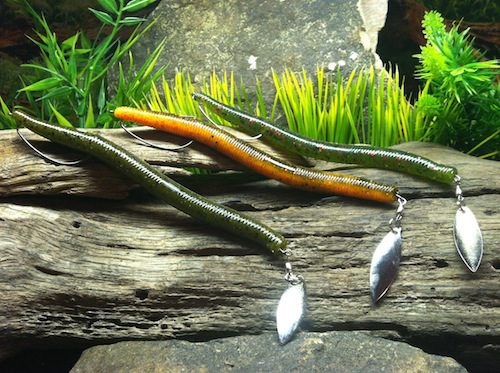
Big baits catch big fish. That’s the bottom line. If you’re targeting big fish, you should be using 8-10” plastic worms and lizards instead of 6-inchers for instance. However, I’m not one of those people that can spend all week chucking a foot long swimbait hoping that a giant will smack it while catching absolutely nothing in the meantime. I need to have action when I’m fishing. But one really interesting thing I’ve found while pursuing big fish is that the little fish hit big lures too. I can’t tell you how many 8 and 10” bass I’ve caught while using 10” worms. It’s almost comical how overzealous some of these smaller fish can get. So don’t worry that when you’re using bigger lures you’ll never catch anything while waiting for the big one to hit. You can catch plenty of smaller fish too.
5. Have the right tackle
There’s nothing worse than hooking a big bass only to have the line break or the fish shake off. Now, there is no way to eliminate the chance that a big one might get away, but you can certainly minimize the possibility. This means making sure your hooks are sharp and strong, your drag is set right, and you are using line you have confidence in. You should also retie your line frequently to eliminate any weak points or frays that have developed.
4. Don’t fish history
It is really easy to fish the spots that you’ve caught a big one in over and over again, simply because you’ve caught a big one there before. It’s also easy to fall into the trap of using the same lure you’ve caught big ones on before over and over. Now, maybe your favorite spot is a true lunker hang-out, and maybe your favorite lure has magical big fish attracting qualities. But chances are, you’re falling into the very common trap of fishing history – fishing spots or using lures because you have a mental connection to them, not because the fish have a connection to them. There was probably a reason you caught that big one on whatever and wherever you did, and in my experience that reason is rarely duplicated. When you’re fishing for the big ones, keep an open mind, don’t fish spots just because you’ve caught them there before, and….
3. Trust your instincts
This is very much a part of not fishing history. Basically, trusting your instincts means adapting to the conditions and letting the fish tell you what to use and where to fish, not the other way around. For example, this time of year in Virginia I would normally be fishing in 10-20 feet of water throwing either deep diving crankbaits or big soft plastics. However, I went out a couple of days ago, and with all the rain we’ve been getting lately in Virginia the water was high and muddy. I tried to force-feed the fish my traditional deep water techniques for about 3 hours, and after 3 hours of catching hardly anything I decided I would pay attention to the conditions and start fishing shallower. Sure enough, not 10 minutes after I started fishing shallower water I caught a bass weighing about 8 pounds on a square bill crankbait. Although it is only one example, this experience shows that traditional wisdom doesn’t always apply. You need to let the conditions tell you what to do instead of force-feeding the fish what has historically worked.
2. Be patient
When you’re fishing for big fish, success doesn’t usually come right away. You need to spend considerable time on the water and maintain a different mindset when you’re targeting big fish. That means being content with fewer bites many times, fishing deeper than you normally do, and spending time looking for out-of-the-way places that others have very likely missed. But once you catch that big fish, I guarantee that you will agree that the hard work is worth it. There is literally nothing that compares to the experience of catching a true giant.
1. Release em’ after you catch em’
Big bass need special genes, special conditions, and many years to attain their large size, and in any given body of water there are usually only a few true giants. If you are lucky enough to catch one, know that if you choose to keep it you are not only depriving other anglers the opportunity to catch that fish, but you are depleting the lake of big bass genes. Especially in smaller waters, the removal of only a few trophy fish can really take a toll on the quality of the fishery. For me at least, the pure excitement that I feel when catching a trophy is enough to help me release every big one I catch in the hopes that some other angler will be able to experience that feeling, and be hooked for life on catching trophy bass.

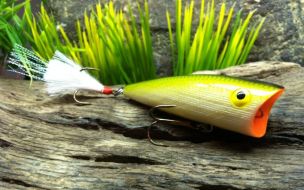
 Classic Lure tips are easy to find. These lures have been around a long time, and the reason for that is because they do the job. One of my favorite classic lures is the Rebel Pop-R. It is probably another lure you remember from your father or grandfathers tackle box. Referred to as “plugs”, these classic lures have been catching bass for more than three decades. “The secret bait of the pros” was what this lure was once called and it has been a top seller for years. These are one of the most imitated baits around for a good reason they work.
 When I was a senior in high school I remember when Memphis Tennessee angler Zell Roland won the Super Invitational in Chattanooga on the Tennessee River, which renewed the fame of the classic lure and got a bit of attention for my state as well during the “Homecoming” that was celebrated that same year.
  The Pop-R is very versatile and can be fished shallow, around weed lines, and over submerged cover. The lure performs well in many situations, but will hang up in cover. With a six and a half to seven foot medium action rod with a limber tip is the best for these top water lures. A rod of this design compensates for the natural reaction of anglers to “set the hook” when they get a top water strike. The limber tip of the rod allows the bass time eat the lure before the angler over reacts. The medium action soft tip performs even better with a heavy 12 –15 lb test monofilament line.
  Experiment with time that you pause between pops and pauses until you find what’s right. The fish will soon let you know what they like. In warm water shorten the time between the pops, and as the water cools down near fall longer pauses between pops produces better results. Don’t pass up a lure just because it is “old school”, give these classics a try and you will see why they have been around so long.


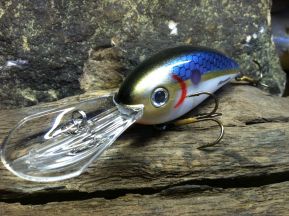


 Crankbait control is the difference between a good angler and a professional angler. Controlling a crankbait goes far beyond tuning, tying and throwing. It is an angler understanding first the conditions, the nature of the bass and the design of the lure that he will be presenting. Speed and depth are vital considerations when choosing to use a crankbait, with size and color being the next things to give thought to.